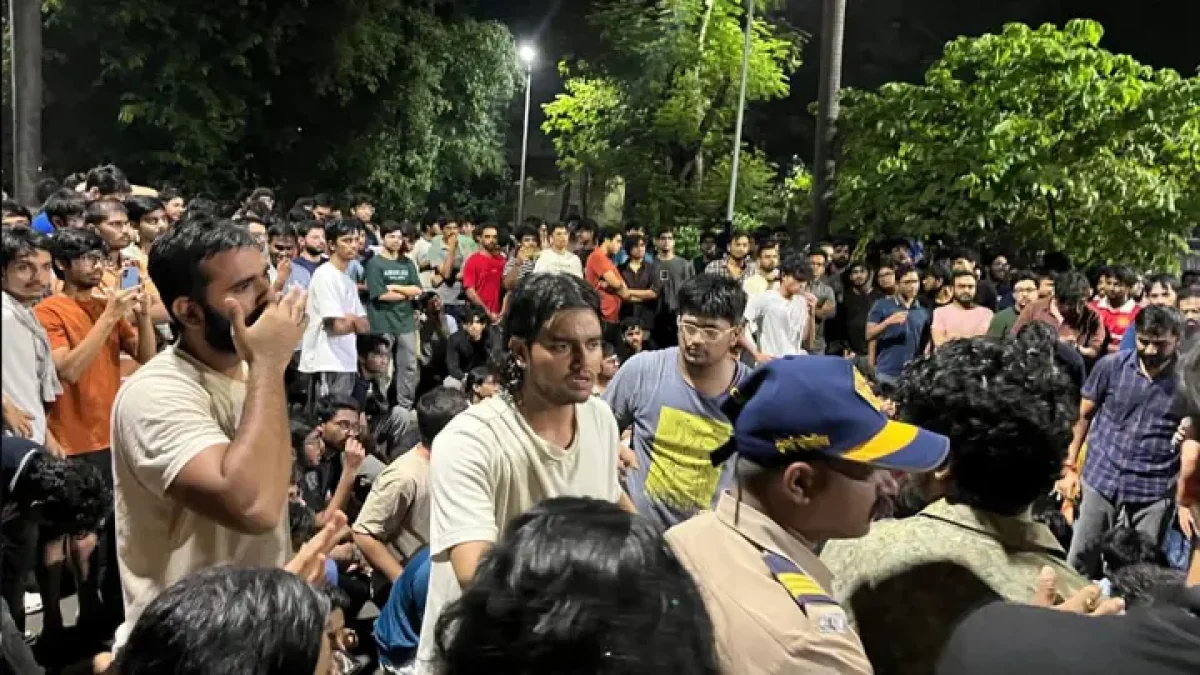
However great a power India claims to be on the world stage of modern technology and scientific advance, the country’s internal reality remains caged by the ancient caste system and social inequality. Caste and religious hatred seem to be dragging the country steadily back towards an older and darker age. India’s student community has recently been stirred by the suicide of Sahil Wakode, a Dalit student at the Indian Institute of Technology (IIT) Bombay, the country’s leading technology institution.
It is alleged that this able young man from a marginalised class, despite passing the highest test of merit, ultimately lost his life as a victim of caste and administrative harassment. Sahil’s family say that a professor made extremely insulting caste-based remarks against him on a false pretext of cheating in an examination, and that he was subjected to systematic mental pressure over a long period. The institution’s authorities, meanwhile, have tried to cover the matter with ordinary rule-breaking and study pressure, and students are seething with anger against that.
This tragedy is not an isolated incident but an extreme expression of institutional discrimination that has run for a long time on India’s elite campuses. In 2016, the so-called institutional murder of Rohith Vemula, a student at the University of Hyderabad, caused an uproar across the country. Promises of independent arrangements to protect marginalised students and settle their complaints were made at the time, but in practice these have remained confined to formal paper structures.
Students allege that institutions such as the IITs have no effective or sensitive forum for hearing Dalit, Adivasi and OBC students or resolving their complaints. On the contrary, the inquiry committees set up by administrations in most cases suppress the legitimate demands of students who face discrimination and justify institutional power. Students’ voices are being stifled through constant administrative surveillance and the threat of punishment in order to suppress any protest.
The figures on deaths bring a chilling picture of India’s higher education system to the fore. According to the Hindustan Times, at least 171 students lost their lives under mental and social pressure on India’s various IIT campuses over the past two decades, from 2006 to 2026. What is worrying is that the number in the first decade was 51, which leapt to 120 in the following decade.
The gravity of the situation emerges still more clearly from recent data showing that 66 students have died at the IITs in the past five years alone. This rising rate of death shows incontrovertibly that, alongside the commercialisation of campuses and the shrinking of state responsibility, survival has become many times harder and more deadly for Dalit, Adivasi and backward-class students. The idea of merit is being used as a weapon in education to sustain a Brahminical social hierarchy, so that first-generation students from marginalised families face extreme mental isolation and discrimination when they reach the big urban campuses.
How deeply cultural and religious orthodoxy has taken root on campuses is evident in various recent steps. A few years ago, separate seating for vegetarians and non-vegetarians was designated in the IIT Bombay hostel dining hall, effectively giving institutional form to discrimination on the basis of diet. More recently, posters appeared on the IIT Mandi campus setting out the four-varna structure and describing the work of Shudras as serving the other three.
Although the authorities tried to evade responsibility in the face of fierce protest, matters such as the top administration’s links with a religious group and the making of a three-credit Gita course compulsory for students are evidence of this discriminatory outlook. The one-sided and politically motivated tendency to prove cow urine, Ayurveda or ancient Vedanta texts to be science, rather than pursuing modern scientific research, is destroying the very purpose of scientific institutions.
Analysts say India’s corporate and elite structures are mouthing the language of merit in order to retain a particular upper-caste dominance rather than achieve social inclusion. On one side a privileged class completes higher education on state subsidy and departs for the corporate world of the developed countries; on the other, propagating the ideology of Babasaheb Ambedkar, the chief architect of the constitution, or speaking about the rights of marginalised people has effectively become an offence on campus.
For all the slogans of modernity and digital India, the deeply rooted chains of caste and a religiously supremacist mentality are steadily turning India’s highest seats of learning into suffocating places. The student movement that began after Sahil Wakode’s death, demanding justice, has now made clear that this decline in India’s education system cannot be halted without an inclusive environment and real steps to end caste oppression.