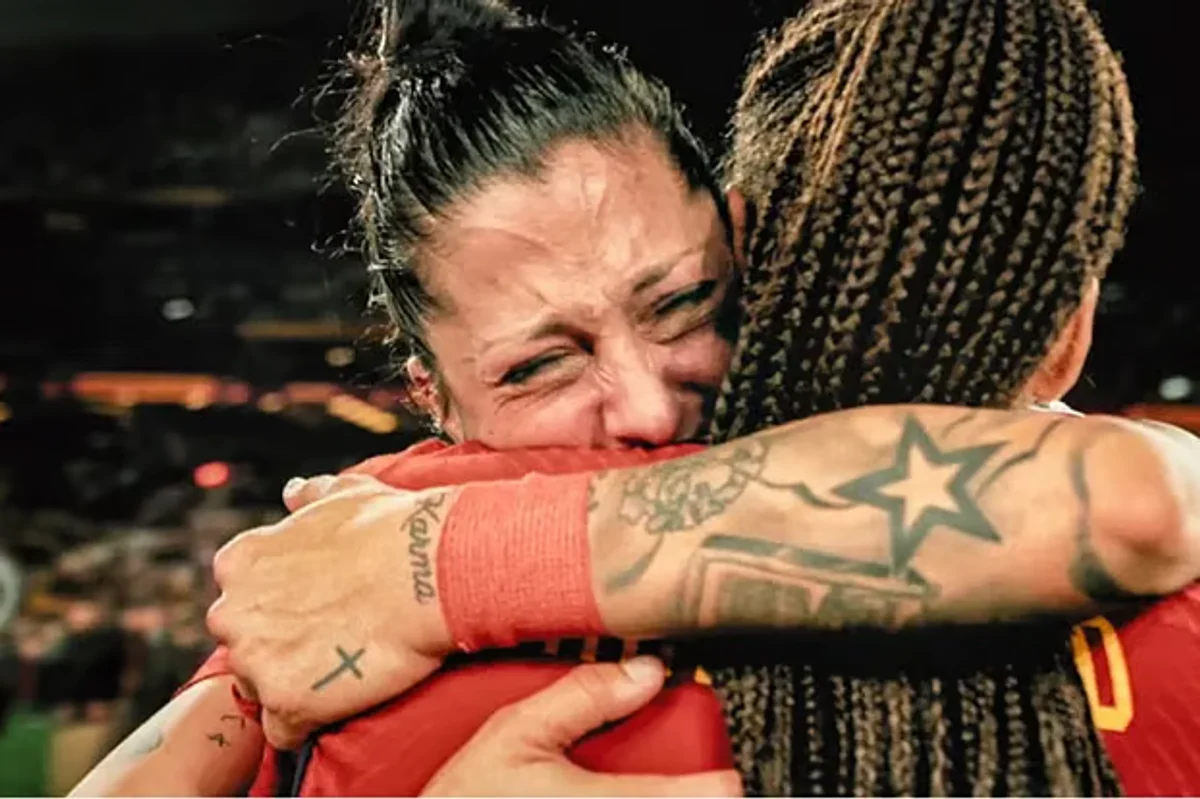
In the history of women’s football, the 2023 Women’s World Cup was a dream come true for Spain. The country became world champions for the first time. But that historic victory was overshadowed by a kiss that drew attention around the world. The kiss did not merely cross one footballer’s personal boundary; it gave rise to an unprecedented social movement over Spain’s sports administration, the abuse of power and the treatment of women.
That episode is at the center of the documentary “It’s All Over: The Kiss That Changed Spanish Football,” released on Netflix on Nov. 1, 2026. So what is in the film?
From World Cup joy to a storm of controversy
Spain became champions by beating England in the final of the 2023 Women’s World Cup. At the medal ceremony, Luis Rubiales, then president of the Spanish football federation, was placing medals around the players’ necks. At that moment he grabbed Spain’s star footballer, Jenni Hermoso, and kissed her on the lips. The incident was caught on television cameras and instantly spread through news media worldwide. Hermoso later said in an Instagram Live that the kiss was not consensual and that she had not welcomed it. That set off controversy, protest and demands for accountability.
‘Se acabo’ — the birth of a movement
In Spanish, “se acabo” means “it’s over” or “no more.” Alexia Putellas, one of the best players in the Spain squad, was the first to use the slogan. She and her teammates announced that they would not return to the national team unless the leadership of the football federation changed.
The “se acabo” hashtag quickly went viral on social media. Not only footballers but athletes from around the world, the United Nations, the Spanish government and ordinary people expressed their solidarity with the movement.
A single kiss gradually grew into a broader social protest against discrimination, harassment and the abuse of power against women.
Poster for “It’s All Over: The Kiss That Changed Spanish Football.” IMDb
What does the documentary show?
In the film, several members of Spain’s World Cup-winning squad speak out together for the first time. They include Jenni Hermoso, Alexia Putellas, Aitana Bonmati, Olga Carmona and Irene Paredes. The documentary covers not only the controversy but also the turbulent period before the World Cup win, the conflict between the players and the federation, the struggle of the World Cup campaign and the story behind the movement that followed. Many of the footballers said in the film that the joy of the greatest achievement of their lives was, in the end, taken away from them by others.
The team’s captain, Irene Paredes, said: “We worked so hard, we made so many sacrifices. But in the end someone else took over the story of our success.”
The director’s account
The film’s director, Joanna Pardos, said the players spoke of experiences they had never shared publicly before. In her view, it is not just a story about football but a record of a moment that created a new chapter in Spain’s sporting and social history.
Rubiales’ downfall
After the kiss incident, Rubiales at first refused to apologize. Instead he announced that he would not resign.
The situation became even more dramatic when his mother took up a position in a local church and announced she was beginning a hunger strike. But in the end, under intense pressure, Rubiales lost his post and was also banned from international football.
Not just football, but a story about society
Although the documentary is essentially about football, its scope goes beyond the game.
It is the story of an episode in which World Cup-winning women fought not for their own success but to defend their dignity and their rights. The Netflix documentary sets out the history of how an unwanted kiss called into question an entire country’s structures of power.
বাংলায় মূল প্রতিবেদন পড়ুন · Read the original Bengali report