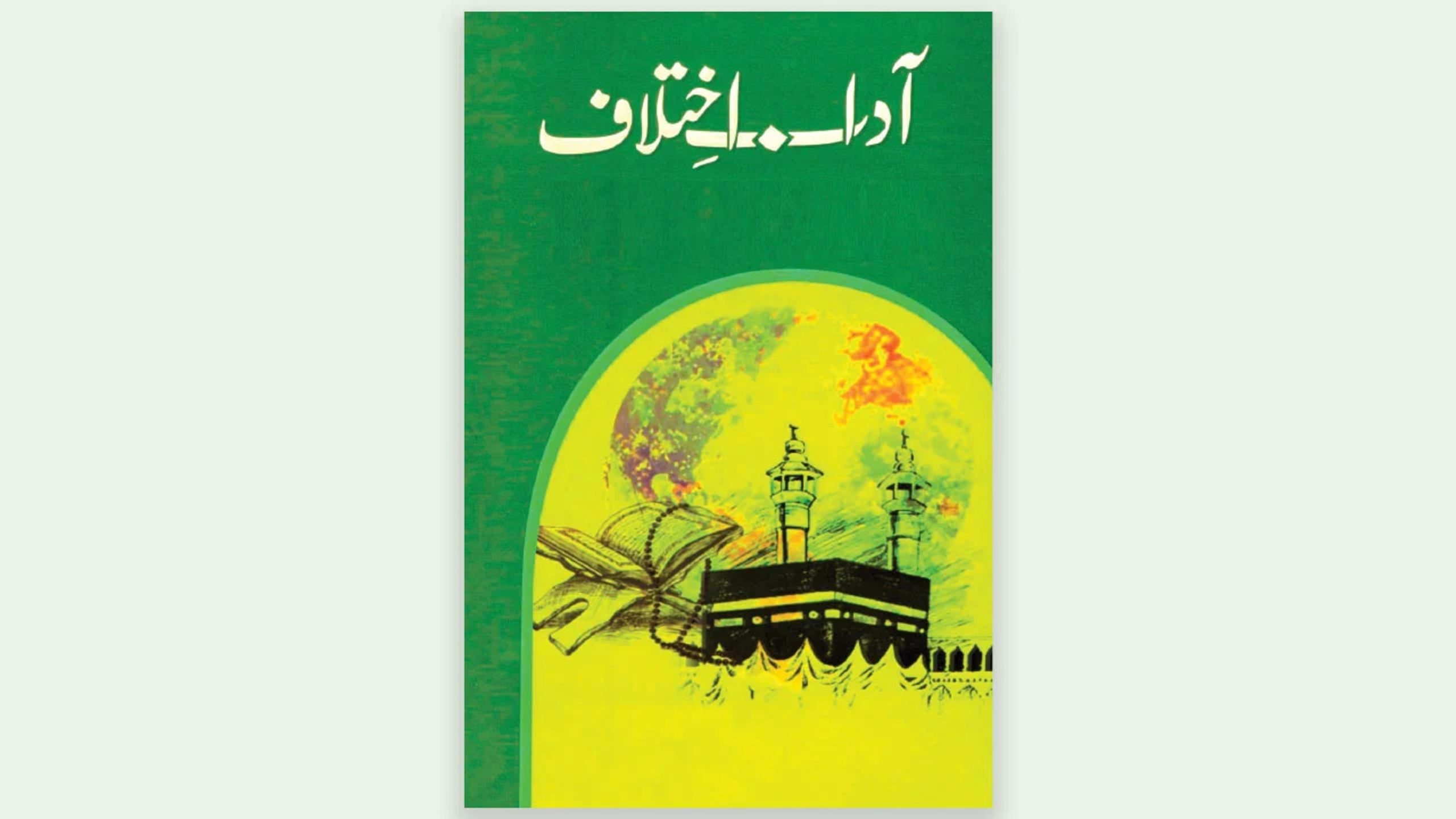
Because of differences in people’s thinking, understanding and judgement, difference of opinion is a natural reality. Islam has not denied this reality; rather, it has laid down a fine set of principles and manners for it. History bears witness that among the Companions, the Followers (tabi’in) and the mujtahid imams of later eras there were differences on many matters. But those differences never destroyed their mutual love, respect and brotherhood. Today, when even a slight difference of opinion becomes a cause of fierce argument, hatred and division on social media or in public, it is essential to recall anew the etiquette of disagreement that Islam teaches.
In the Holy Quran, Allah the Exalted says: “And hold firmly to the rope of Allah all together, and do not become divided.” (Sura Ale Imran: 103) This verse teaches us that preserving the unity of the ummah is a fundamental duty. But unity does not mean holding the same opinion on every matter. Rather, Islam’s teaching is to stay united on the fundamental principles of the Quran and Sunnah while accepting differences on matters of ijtihad with tolerance.
Difference of opinion is natural
In the age of the Messenger of Allah (peace be upon him) we find an important example of difference of opinion. During the expedition to Banu Qurayza he told the Companions: “None of you should pray the Asr prayer until you reach Banu Qurayza.” One group of Companions took the instruction literally and prayed only after reaching the destination. Another group understood that the Prophet’s (peace be upon him) intent was to reach quickly, so they prayed on the way, at the proper time. When the matter was later put before the Messenger of Allah (peace be upon him), he did not blame either group. This event proves that a difference arising from sincere ijtihad can be acceptable.
The lives of the imams of the four schools of law are also a shining example of the etiquette of disagreement. Imam Abu Hanifa, Imam Malik, Imam Shafi’i and Imam Ahmad ibn Hanbal (may Allah have mercy on them) held differing views on many questions. But they never insulted one another or regarded one another as enemies. Rather, they acknowledged one another’s knowledge, piety and sincerity. A famous saying of Imam Shafi’i (may Allah have mercy on him) is: “My opinion is more likely to be correct, but it may be wrong; and another’s opinion is more likely to be wrong, but it may be correct.” This statement is a unique example of a scholar’s humility, generosity and devotion to the truth.
Beautiful speech and good conduct
Allah the Exalted says: “And speak good words to people.” (Sura al-Baqara: 83) Even where there is a difference of opinion, taunting, mockery, slander or abuse cannot be part of a Muslim’s character. In Islam we are taught to answer an argument with an argument, not with a personal attack.
Justice and fairness
Even where there is a difference with a person or a group, they must be treated with justice. Allah the Exalted says: “And do not let hatred of a people prevent you from being just. Be just; that is nearer to righteousness.” (Sura al-Ma’ida: 8) So distorting an opponent’s words, harbouring needless suspicion about their intentions, or concealing their good points is not the teaching of Islam.
Following knowledge and evidence
Opinions must be expressed in the light of the Quran and Sunnah and the explanations of reliable scholars. To comment on matters of Islamic law with little knowledge, or to declare others astray, is extremely dangerous. In particular, spreading opinions without verification on social media in the present time is creating confusion.
We must also remember that the fundamental creed and obligatory rulings of Islam are one thing, and differences in matters of jurisprudence open to ijtihad are another. Treating the two as the same creates needless division.
In today’s world the Muslim ummah is passing through crises of many kinds. At such a time what we need most is mutual cooperation, tolerance and brotherhood. Differences of opinion may well exist, but those differences must not become a cause of hatred, slander or division. Rather, they should be a means for the growth of knowledge, the search for truth and mutual learning.
Islam has taught us that if a difference of opinion is conducted within the bounds of the Quran and Sunnah, with manners, a sense of justice and piety, then it is not a sign of weakness but of intellectual richness. So it is the duty of a conscious Muslim to manage differences not through blind following of a person or party, but through loyalty to evidence, humility, tolerance and a sense of brotherhood. It is along this path that the unity of the ummah will be strengthened and the beauty of Islam will shine forth more brightly.
বাংলায় মূল প্রতিবেদন পড়ুন · Read the original Bengali report