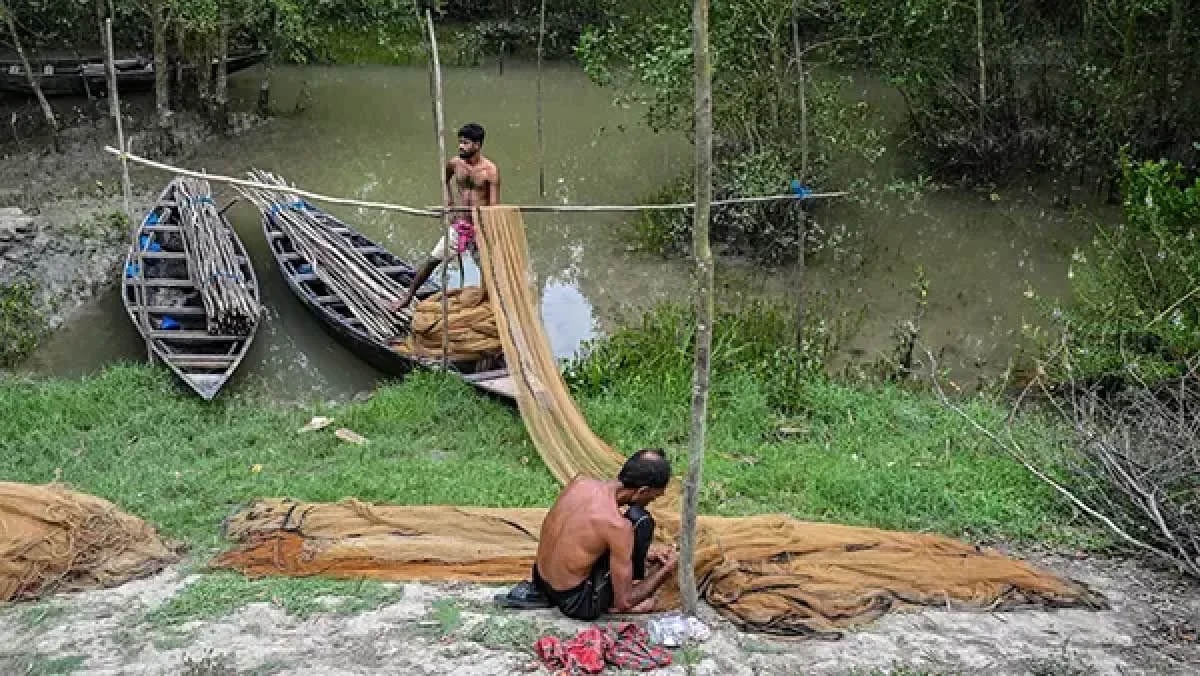
A major Britain-funded climate project based in the Sundarbans in Bangladesh is being shut down two years ahead of schedule because of cuts to the U.K.’s foreign aid budget. As a result, about 20,000 people covered under the project will be denied the support they were expecting, and some initiatives already under way will effectively be put at risk. The information was reported by The Independent’s online edition.
British development organization Practical Action launched the project in the Sundarbans area in 2023. Meant to run until 2028, it planned to provide solar power, climate-resilient agriculture, fish-farming technology and early-warning systems for cyclones and heavy rainfall. Its target was to reach 57,000 people. But because of reduced funding, the project is ultimately being wound down early.
The project was due to receive £2.2 million through 2026, but the organization says it has received “far less” than that. This past April, it was ordered to close the project by June. Following lobbying efforts, the deadline was later extended to September. Practical Action’s project is part of a broader decision to cut bilateral aid between Britain and Bangladesh. Britain’s bilateral aid to Bangladesh will fall from £66.7 million to £31 million between fiscal years 2025-26 and 2026-27 — a cut of more than half. Over the same period, Britain plans to reduce its overall foreign aid budget from 0.5 percent of GNI to 0.3 percent.
Tamanna Rahman, Practical Action’s climate resilience lead, said the abrupt closure of the project has damaged the trust built with local communities. It has also reduced the scope for long-term planning and for making the project’s benefits sustainable, she said.
Through this project, local resident Bina Mondol received a solar panel. Being able to work at night as a result raised her family’s fishing income from about 2,000-3,000 taka a month to 4,000-5,000 taka. Another resident, Basanti Mondol, received a solar-powered rice-husking machine, giving her the opportunity to earn an income from home.
News of the project’s closure left some local residents in tears, while others could not understand why support was being cut just as the initiatives were starting to show results.
There is also particular concern over a project involving 140 entrepreneurs. Each was given 50,000 taka and initial training, but Practical Action fears that with the project now closing, they could find themselves back at “square one.”
Practical Action says it is trying to secure new grants from various foundations to fill the project’s funding gap. But with the closure decided on just a few months’ notice, there was no time left to find new financing.
Sarah Champion, chair of the U.K. Parliament’s International Development Committee, said shutting down a project two years early like this raises serious questions about Britain’s commitment to standing by low-income countries in the fight against climate change. It could damage both the proper use of British taxpayers’ money and London’s international reputation, she said.
Britain’s Foreign, Commonwealth and Development Office (FCDO), for its part, said it is gradually moving away from high-volume grant-based foreign aid to place greater emphasis on direct partnerships with the governments of developing countries. It claims this approach will help strengthen government systems, increase financing and reduce dependence on aid.
বাংলায় মূল প্রতিবেদন পড়ুন · Read the original Bengali report