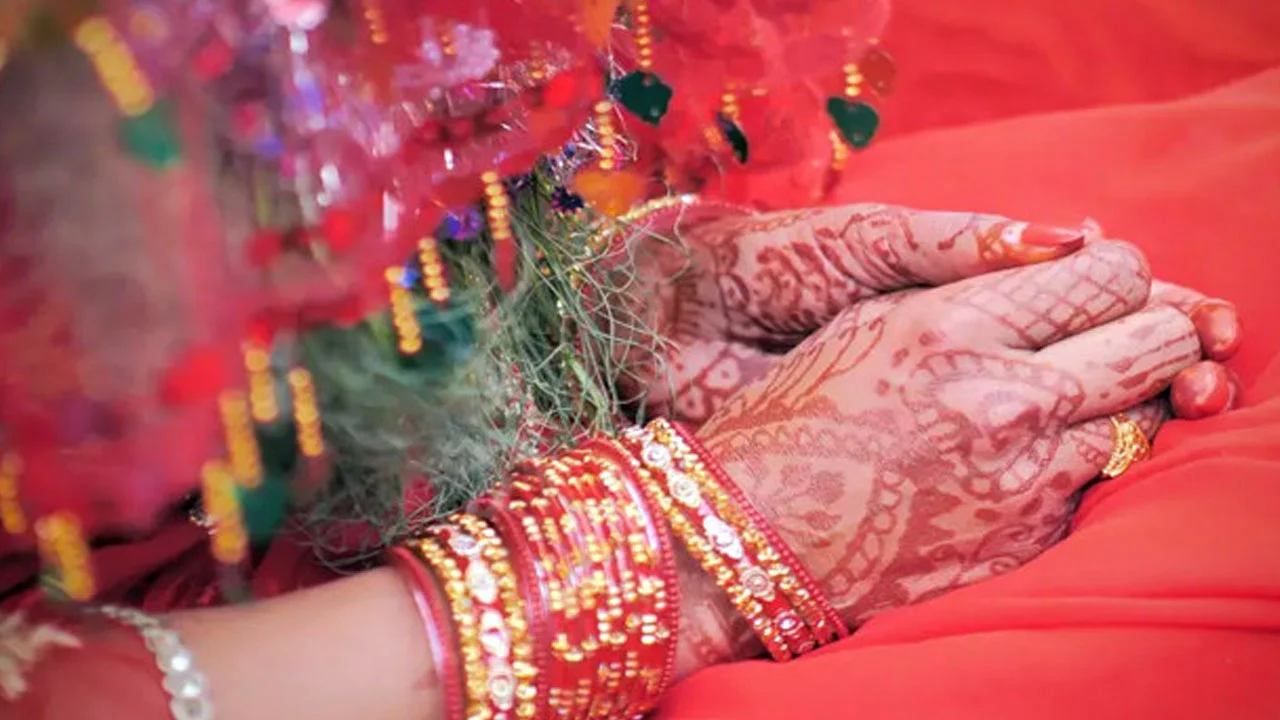
Marriage is not merely the name for two people living together. It is a bridge of trust between two souls, the union of two families, the carrier of two lineages and the moral foundation of a civilised society. Islam therefore establishes marriage not as a matter of purely private preference but as a social obligation, a matter of human dignity and a sacred covenant given by God.
God says: “And marry the unmarried among you and the righteous among your male and female slaves. If they should be poor, Allah will enrich them from His bounty. Allah is all-encompassing and all-knowing.” (Surah An-Nur: 32) This verse does not merely permit marriage; it reminds society of its responsibility to bring marriages about. Marriage, in other words, is something that should be established with society’s knowledge and with dignity.
Transparency of marriage in the light of the Sunnah
Islam does not only recognise marriage as a lawful relationship; it teaches that it should be conducted in a way that makes its legitimacy clear to society. That is why the Prophet Muhammad (peace be upon him) established the walima as a sunnah. The walima is not merely a meal; it is a graceful announcement of social recognition for a new married life. Several hadith are cited in this connection.
1. The instruction to hold a walima
On hearing news of the marriage of Abdur Rahman ibn Awf, the Prophet told him: “Hold a walima, even if with a single goat.” (Bukhari: 5167) One purpose of the walima is to inform society that the marriage is lawful and recognised. The hadith therefore indirectly directs that marriage should be made public rather than kept secret.
2. The Prophet’s own practice
The Prophet held a walima after his marriage to Zainab bint Jahsh and invited the companions. Anas ibn Malik narrated: “The Prophet did not hold as large a walima for any of his wives as he did for Zainab. He held the walima with a goat.” (Bukhari: 5168)
This practice shows that making a marriage socially known is a sunnah. Announcing a marriage and conducting it in a mosque also serve to publicise it, sparing people from suspicion. The Prophet’s own practice was to establish marriage socially.
3. A secret marriage without witnesses is not acceptable
A so-called marriage conducted in secret, without witnesses or in disregard of religious requirements, is entirely invalid in Islam. The Prophet said plainly: “There is no marriage without two just witnesses.” (Bayhaqi)
The practice of the companions
Hasan al-Basri narrated that a man married a woman and kept it secret, visiting her house in private. Another man, seeing him enter her home, accused him of fornication. The matter was brought before Umar.
Questioned by Umar, the man said: “I married this woman for a small dower and kept the matter secret.” Umar asked: “Who witnessed this marriage of yours?” He replied: “Some members of the bride’s family were witnesses.” Umar then waived the punishment for false accusation from the accuser and said: “Announce and publicise this marriage, and through it protect your chastity.” (Musannaf Ibn Abi Shaybah)
Imam Malik narrated that a marriage was brought before Umar in which the only witnesses were one man and one woman, and which had been kept entirely secret. On learning of it, Umar said: “This is a secret marriage and I do not permit it. Had I known of this marriage earlier, I would certainly have had them stoned.” (Muwatta Malik)
Both accounts illustrate the harm in concealing a marriage. In the first, a marriage conducted before witnesses was ordered to be made public so that accusation and confusion would end. In the second, a secret marriage was strongly condemned because there were serious questions about its transparency and proper testimony: if there is one male witness, at least two female witnesses are required.
Consensus and the juristic view
Jurists agree that a marriage without witnesses is not acceptable under Islamic law. All four schools recognise the importance of witnesses, though they differ on some conditions. Imam Malik was particularly critical of secret marriages in which the witnesses are themselves told to keep the matter hidden. In his view this defeats the social purpose of marriage and creates the risk of discord.
Among the objectives of Islamic law (maqasid al-shariah) are the preservation of lineage, the protection of honour and the securing of family stability. Making marriage public plays an important part in fulfilling those objectives.
Secret marriage in the four schools
Hanafi: Hanafi jurists hold that a marriage is valid if offer and acceptance take place before two just witnesses. Even so, keeping a marriage needlessly secret despite the presence of witnesses is contrary to the sunnah and socially undesirable, because the walima and the announcement make the marriage known and close off future disputes and accusations. Imam al-Kasani said that one purpose of the rule on witnesses is to distinguish marriage from fornication and make it clear to people. (Hidayah, Kitab al-Nikah)
Maliki: The Maliki school takes the strictest position against secret marriage. If the husband, wife and witnesses are told to keep the marriage secret, Imam Malik classified it as nikah al-sirr, a secret marriage, and it is also narrated from him that such a marriage should be annulled.
Ibn Abd al-Barr said: “A marriage concluded on the condition that it be kept secret is nikah al-sirr; Malik did not consider it valid.” (Al-Mudawwana al-Kubra, vol 2; Ibn Abd al-Barr)
Shafi’i: Imam Shafi’i held that a marriage before two witnesses is valid, but that the announcement and the walima are sunnah and the best means of making the marriage known in society. Imam Nawawi said: “If witnesses are present the marriage is valid; but the walima and the publicising of the marriage are sunnah.” (Al-Majmu Sharh al-Muhadhdhab, Imam Nawawi)
Hanbali: Imam Ahmad ibn Hanbal held that a marriage without witnesses is not valid. He encouraged making marriage public and treated the walima as an important sunnah. Ibn Qudamah wrote: “Among the purposes of marriage are the preservation of lineage and informing people of the relationship; witnesses and announcement are important for this.” (Al-Mughni, Ibn Qudamah, Kitab al-Nikah)
The present reality: why secret marriages are increasing
In this technology-driven age people can communicate more easily than at any earlier time, but transparency in relationships is in many cases declining. Social media, online acquaintance and individualistic ways of living are pushing many young people towards decisions in which keeping a marriage hidden from family and society seems safer. Some choose that path for fear of family disapproval, some out of economic uncertainty, and some in order to conceal a second marriage.
The reality is that secret marriage rarely brings benefit in the long term. When a relationship is denied, wives and children suffer most. Complications can arise over a wife’s maintenance, inheritance and legal protection, and over a child’s legitimate identity. In many cases social stigma, family disputes and long legal battles follow. Islam’s purpose is not to create such crises but to prevent them.
Among the fundamental objectives of Islamic law are the protection of religion, life, intellect, property and lineage. Establishing marriage socially plays an important part in preserving at least two of these, lineage and honour. Public marriage is therefore not only a religious sunnah; it is an essential condition of social justice and human dignity.
What society needs today is a culture of marriage in which family consent, legal registration, the presence of witnesses and social recognition are secured together. Marriage is not only a private decision between two individuals; it is a social responsibility, a moral commitment and the foundation on which a generation is built.
বাংলায় মূল প্রতিবেদন পড়ুন · Read the original Bengali report