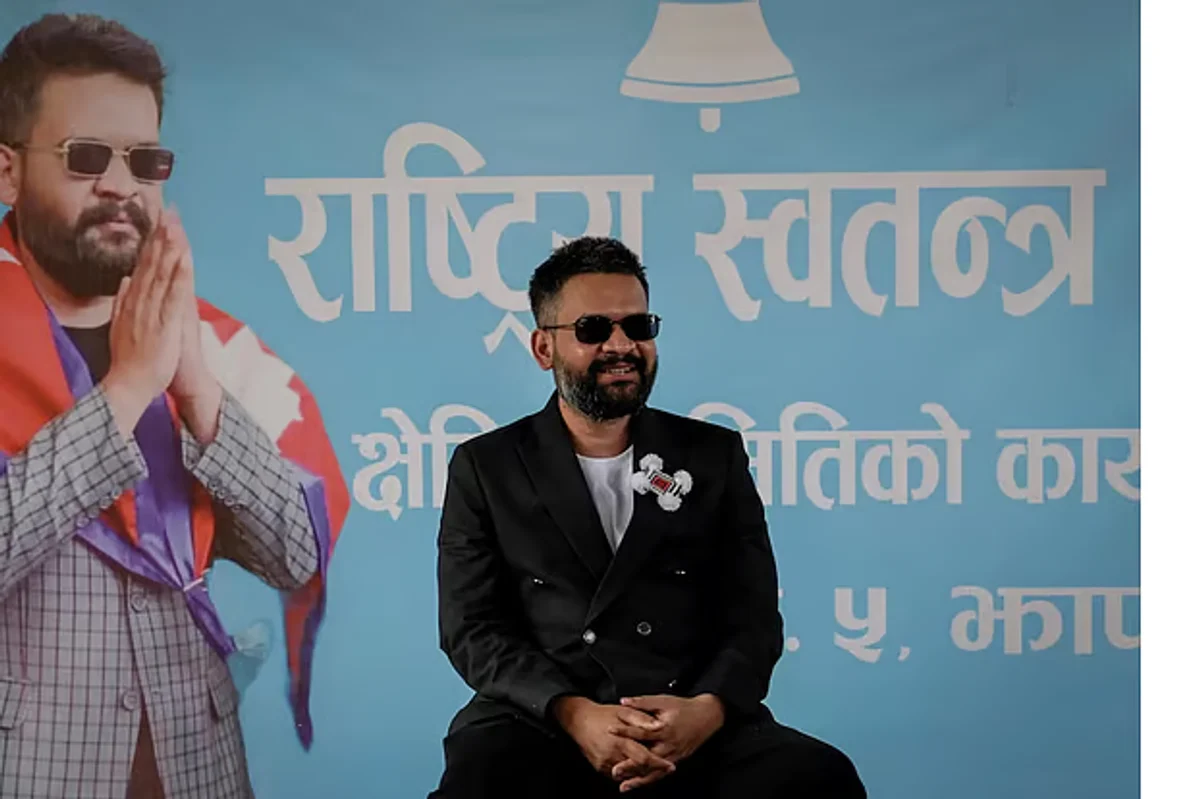
Nepal has become unstable again, driven by economic crisis, a lack of jobs and uncertainty over the future of its young people. Over the past three days, three young men have attempted self-immolation in the country. Two of them have died so far, and one more is being treated in hospital with severe burns. Amid protests that have spread to various parts of the country, the demand for the resignation of Prime Minister Balendra Shah has grown louder.
Protesters have taken to the streets in the capital, Kathmandu, and elsewhere. The main opposition Nepali Congress has alleged that the government has failed to restore confidence among young people and to take effective steps over their future. The youth organization “Gen-Z Nepal” has claimed that the current government is running the country with an authoritarian attitude, ignoring the public interest, and that there are no realistic steps in its budget or policy to create jobs, raise incomes and ensure the economic security of the young.
Amid the current movement, the 2023 self-immolation of Prem Acharya has also come up for discussion again. At that time Balendra Shah, then serving as mayor of Kathmandu, had described the incident as a symbol of state failure. But the opposition and protesters are now questioning his silence during the present crisis. Analysts say the recent events have created fresh concern over the mental health of Nepal’s young people, rising unemployment and the effectiveness of government policy. Representatives of political parties and civil society have warned that the situation could grow more complicated unless effective steps are taken quickly.
After being elected mayor of Kathmandu in 2022, Balendra Shah won wide popularity by running city clean-up work, heritage preservation and anti-corruption drives. The eviction of illegal structures eased traffic somewhat but drew opposition from a section of hawkers and slum-dwellers. His influence extended beyond politics into the cultural sphere: during last September’s anti-government movement, his song “Nepal Haseko” (Nepal is smiling) became widely popular among demonstrators and was used as a symbol of protest. At least 77 people were killed in that movement, which was directed against social-media restrictions, corruption, unemployment and economic stagnation. In the general election held on March 5, the party led by Balendra Shah won a major victory, seen as a big blow to Nepal’s established political parties. He strengthened his political position further by defeating former prime minister K P Sharma Oli in the Jhapa-5 seat, and at just 35 set a record as the youngest prime minister in Nepal’s history.
বাংলায় মূল প্রতিবেদন পড়ুন · Read the original Bengali report