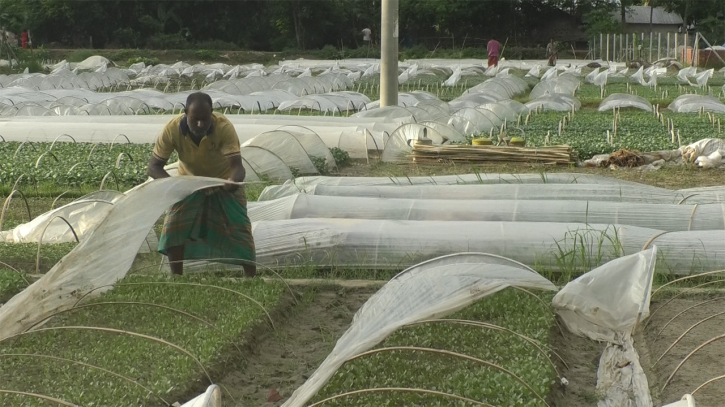
Growers say they produced seedlings with loans taken from NGOs, and that with the seedlings ruined and instalments unpaid, their debt burden is mounting. They allege the culvert built to drain water from Abdulpur field is small and narrow, causing year-round waterlogging.
A visit found that growers in Abdulpur village of Churamankati union in Jashore Sadar upazila produce and trade seedlings worth roughly 15 crore taka a year. The vegetable-seedling business grew up here more than four decades ago. Although it has long made an important contribution to the farm economy, growers here are not covered by free fertiliser, seed and pesticide, so they must rely on NGO loans for their working capital. When production is hit by natural disaster or any other cause, they face losses, a debt burden and hardship.
When this reporter recently visited Abdulpur field, clouds suddenly gathered, and growers began rushing about with polythene to save their seedlings, busy tying sheets to four small bamboo stakes to make shade. Many seed beds lay empty with ruined seedlings, and most of the seedlings still standing were on the verge of ruin. Grower Zakir Hossain, moving the surviving seedlings apart by hand, said their bases had rotted and they would die within a day or two, and that no one would buy them; the bases of most of his 90 beds’ seedlings had rotted in the waterlogging and all the sown seed was ruined, a loss of more than a lakh taka.
Another grower, Ashraful Islam, said he had early-variety cauliflower and cabbage seedlings on 42 decimals of land and had also sown seed; the continuous rain on 10 and 11 July ruined most of the seedlings and rotted all the sown seed. He said one bed costs more than 4,000 taka in fertiliser and seed besides labour, and that seed prices were now very high, at 900 taka a packet for cabbage seed, putting his total loss at about 2 lakh taka.
Abdulpur growers said government incentive support — free fertiliser, seed and pesticide — is available for rice, jute, wheat, maize and other crops, but seedling growers, though they produce crores of taka worth of vegetable seedlings year-round, are outside the incentive net and struggle even to raise working capital, forcing them to take high-interest NGO loans. Grower Jahangir Alam said he had taken an NGO loan to grow early cauliflower, cabbage and brinjal seedlings on 33 decimals; two days of rain had ruined him, with seedlings destroyed and seed rotted for a loss of 2.5 lakh taka, and his debt burden was rising as he could not pay instalments properly. He said low-interest, easy-condition government loans would help.
Asked why they do not take loans from Krishi Bank or similar banks instead of high-interest NGOs, grower Asaduzzaman said banks demand various documents and one has to visit day after day to prepare and submit them, and even then loans are hard to get — often the season ends before a loan comes through. He said seedlings and seed of cauliflower, cabbage, brinjal and tomato grown with an NGO loan on 10 decimals had been ruined for a loss of a lakh taka, leaving him desperate, and that he was trying to start again with a loan from another NGO. Farmer Nazrul Islam said he had grown seedlings on 66 decimals, spending lakhs of taka, and suffered a 2.5-lakh-taka loss to waterlogging; he said the field’s drainage culvert was very small and narrow, causing waterlogging instead of draining water, and demanded a new, wider culvert.
Rafiqul Islam, the sub-assistant agriculture officer responsible for the area, said two days of continuous rain had badly damaged tomato, brinjal, cauliflower and cabbage seedlings, and that a list of affected farmers was being prepared to provide necessary support, with guidance being given on how to make up the loss quickly by cultivating other vegetables and crops.
বাংলায় মূল প্রতিবেদন পড়ুন · Read the original Bengali report