The geopolitics of the Middle East stands once again at the edge of a deep change. The recent Iran–US–Israel war was not confined to military conflict; it has shaken the regional security order that has endured for a long time. According to analysts, this war is leading toward a reshaping of the Middle East’s balance of power, much as Iraq’s 1990 invasion of Kuwait and the 2003 Iraq war did.
For a long time the United States has presented itself as the chief guarantor of security in the Gulf region through military bases, missile-defence systems and early-warning technology. But the recent conflict has shown that, despite this security umbrella, Gulf countries are not fully protected from the effects of regional tensions.
As an example, it is said that Iranian attacks temporarily damaged about one-fifth of Qatar’s liquefied natural gas (LNG) export capacity. This made clear that the US military presence is not always able to protect against economic and security risks.
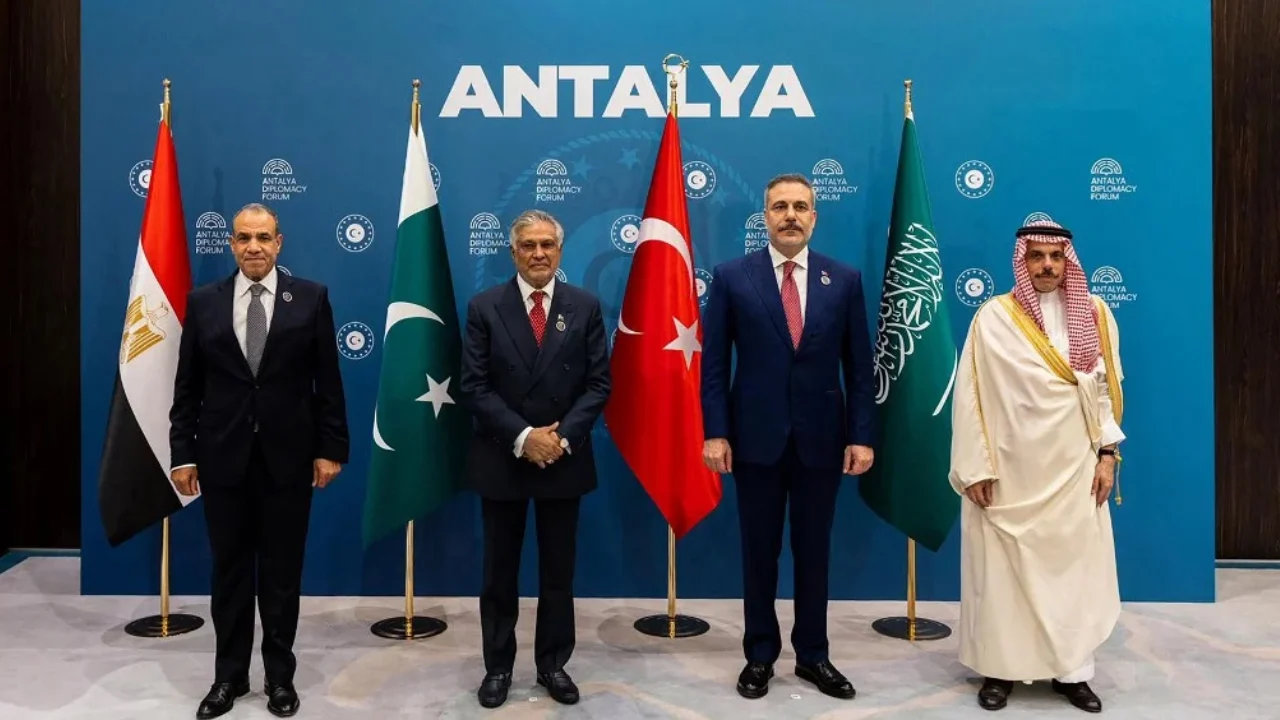
This reality is pushing Gulf countries toward alternative security frameworks. In particular, there is a growing tendency toward coordination among Saudi Arabia, Turkey, Egypt and Pakistan.
According to analysts, these countries’ capabilities complement one another: Saudi Arabia’s economic strength, Turkey’s defence industry, Egypt’s geographic and military position and Pakistan’s military and strategic capability could together form the basis of a possible security framework.
But it cannot yet be called a full alliance. Historical disputes and a lack of trust still complicate relations among these countries.
Israel, meanwhile, is building a new kind of network to reshape its strategic position, seen as a modern version of the “periphery doctrine” followed in the mid-20th century. Under this strategy, a security belt outside the Arab world is being built through regional and global partnerships.
One of the central powers in this network is the United Arab Emirates. Since the Abraham Accords of 2020, cooperation between Abu Dhabi and Tel Aviv in maritime security, technology and infrastructure has grown rapidly.
India is playing an important role in this new framework. The India–Israel–UAE–US I2U2 grouping and the proposed India–Middle East–Europe Economic Corridor are further strengthening these strategic links.
According to figures from the Stockholm International Peace Research Institute, India was the largest buyer of Israel’s arms exports in 2020–2024, accounting for about 34 percent of total exports.
On the European side, Greece and Cyprus have strengthened energy and maritime-security cooperation with Israel, which is also seen as a strategy to balance Turkey’s influence.
To the south, Ethiopia and Somaliland are becoming part of the new geopolitical equation. After Houthi attacks in the Red Sea and Horn of Africa region, Israel has increased its focus on sea-lane security and protecting trade routes.
In this region, the interests of Israel, the UAE and Ethiopia appear to align, which at the same time creates new strategic challenges for Egypt, Saudi Arabia and Turkey.
According to analysts, the Middle East is not now splitting into two rigid blocs. Rather, the region is entering an era of “flexible overlapping partnerships,” in which countries cooperate in one area while remaining rivals in another.
Economic dependence and pragmatic diplomacy are making these relationships more complex. Egypt, for example, depends on Gulf investment on the one hand while maintaining peace with Israel on the other.
বাংলায় মূল প্রতিবেদন পড়ুন · Read the original Bengali report