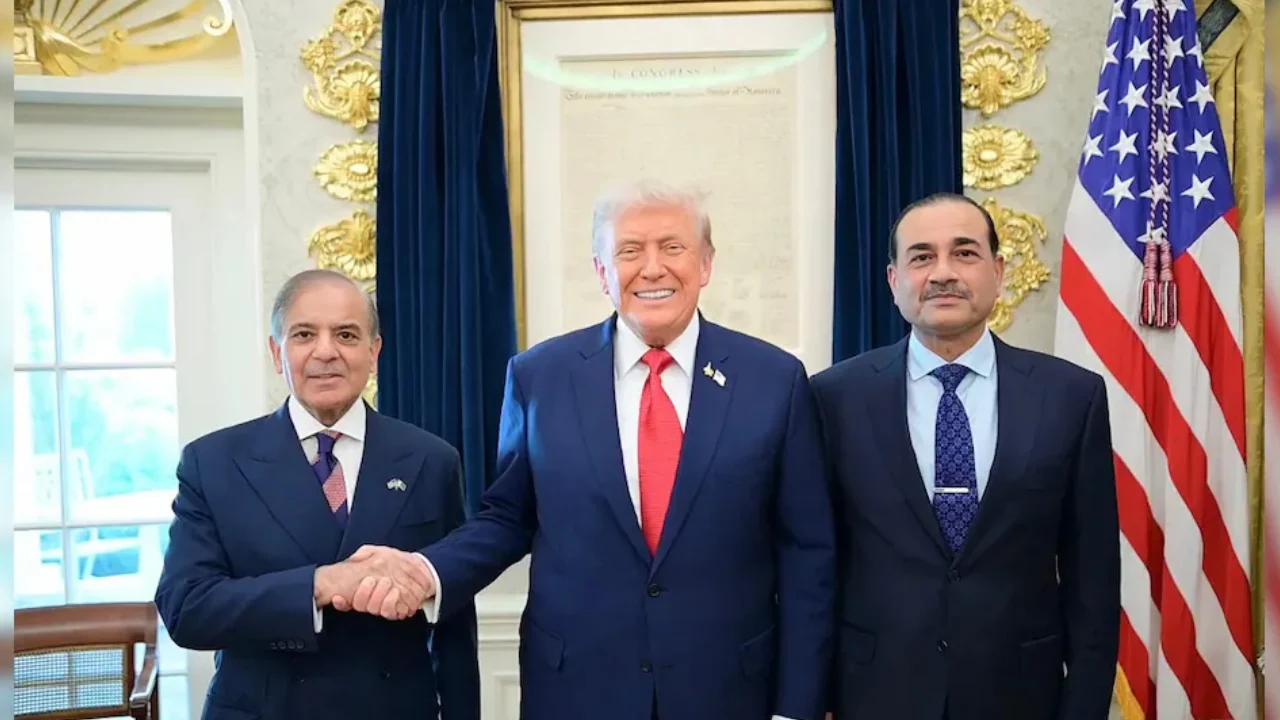
Pakistan has come into renewed focus in the arena of international diplomacy following the announcement of the signing of a memorandum of understanding (MoU) to resolve the ongoing conflict between Iran and the United States. The country’s prime minister, Shehbaz Sharif, has claimed that Pakistan played the role of mediator in the understanding, known as the ‘Islamabad Memorandum of Understanding.’
According to Shehbaz Sharif, the presidents of the United States and Iran signed the agreement electronically, resulting in an understanding to reopen the Strait of Hormuz and withdraw the US naval blockade. He also thanked the leadership of Qatar, Saudi Arabia, Turkey and Egypt for their help with the initiative.
According to international analysts, the initiative could be regarded as one of Pakistan’s most important diplomatic successes in recent history. The Iran-centred tension in the Middle East had had a major impact on the global energy market and economy; after the announcement of the understanding, oil prices fell and a positive trend was seen in various stock markets.
Pakistan’s diplomatic success has also created fresh discomfort for India, observers believe. Although India has long pursued a strategy of isolating Pakistan on the international stage, analysts say this is not easy in the current geopolitical situation.
According to experts, there are several important reasons behind Pakistan’s rising international importance. With a population of more than 240 million, the country is one of the world’s largest Muslim states, and its religious and political influence in the Muslim world has given it a special position. The large number of Pakistani expatriates in various Middle Eastern countries has also increased the country’s strategic importance.
Pakistan is also in an important position in terms of military strength, having one of the world’s largest standing armies. It has built up a defence industry jointly with China and Turkey and is exporting fighter jets, drones and other military equipment to various countries.
Pakistan’s position as a nuclear-armed Muslim state also carries special weight in international politics. Various reports say the country has about 170 nuclear warheads. At the same time, military cooperation with Saudi Arabia and other Gulf countries has increased Pakistan’s strategic influence.
Geography is also considered one of Pakistan’s strengths. Its land borders with India, Afghanistan, Iran and China, and its position on the coast of the Arabian Sea, have made it important to regional and global powers. In particular, Pakistan is a key hub of China’s Belt and Road Initiative (BRI).
Alongside these strengths, however, the country faces various internal challenges. Insurgency in regions including Balochistan, political instability and economic crisis are major concerns for Pakistan, and its reliance on financial assistance from the International Monetary Fund (IMF) and allied countries is seen as one of its weaknesses.
According to analysts, Pakistan has managed to maintain its importance on the international stage through a pragmatic, interest-based foreign policy, and its claim of mediation in the recent Iran-US understanding is being seen as part of that strategy. As a result, international-relations experts believe it has now become far harder than before to ignore or isolate Pakistan completely in the geopolitics of South Asia.
বাংলায় মূল প্রতিবেদন পড়ুন · Read the original Bengali report