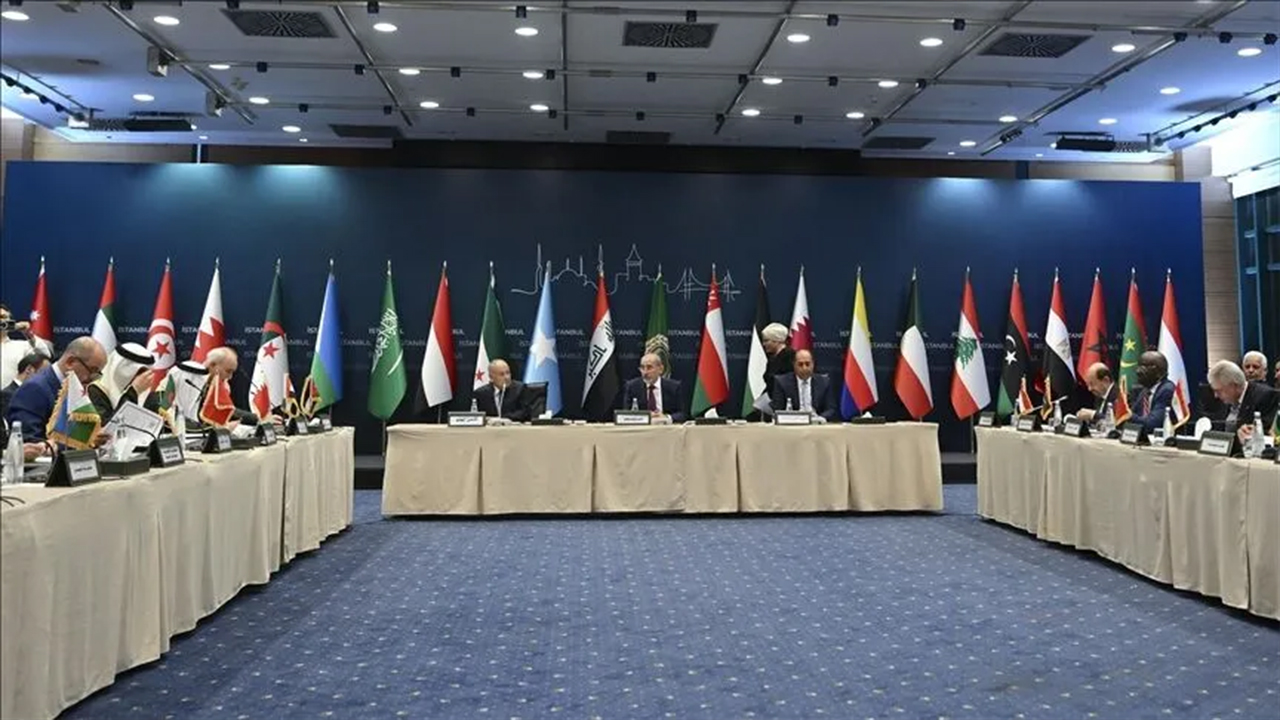
Keeping themselves entirely out of the terrible conflict between Iran and Israel is now the single main aim of the Arab countries. Even as tension peaks, no country in the Middle East wants to be a direct party to the war. Analysing the situation, the founding director of the Arab Perspectives Institute and a researcher at the Middle East Council on Global Affairs, Zaidoun Alkinani, said the Arab countries that, by their geography, are right next to this military heat have one clear position: they will in no way risk their own existence by getting entangled in the dangerous cycle of one side’s attack and the other’s counter-attack.
Al Jazeera reported on 23 July that, in Alkinani’s view, while the Arab countries at the heart of the conflict are trying their utmost to keep their distance, Iran and Israel are walking the opposite path. Although they are locked in fierce fighting between themselves, both countries have the same strategic aim: to widen the war further and draw multiple countries into it. Iran wants the Arab countries of the Persian Gulf to understand that the existence of their own security is deeply tied to this conflict. Israel, on the other hand, wants to give the world, and Iran in particular, the geopolitical message that the areas included in the “Greater Israel” project — including the Levant, or the eastern Mediterranean region — are its own zones of protection, where any strike is certain to be met with a response.
In an effort to stop the fire of war spreading further, Jordan and the other neighbours around it are now united. However much tension rises in the Strait of Hormuz and the nearby region, close watch is being kept to ensure that the whole region does not turn into a battlefield through the direct presence of the United States or any other power. The Arab world is now determined, at any cost, to dispel the fear of such regional destruction and to keep its own territory and airspace safe.
বাংলায় মূল প্রতিবেদন পড়ুন · Read the original Bengali report