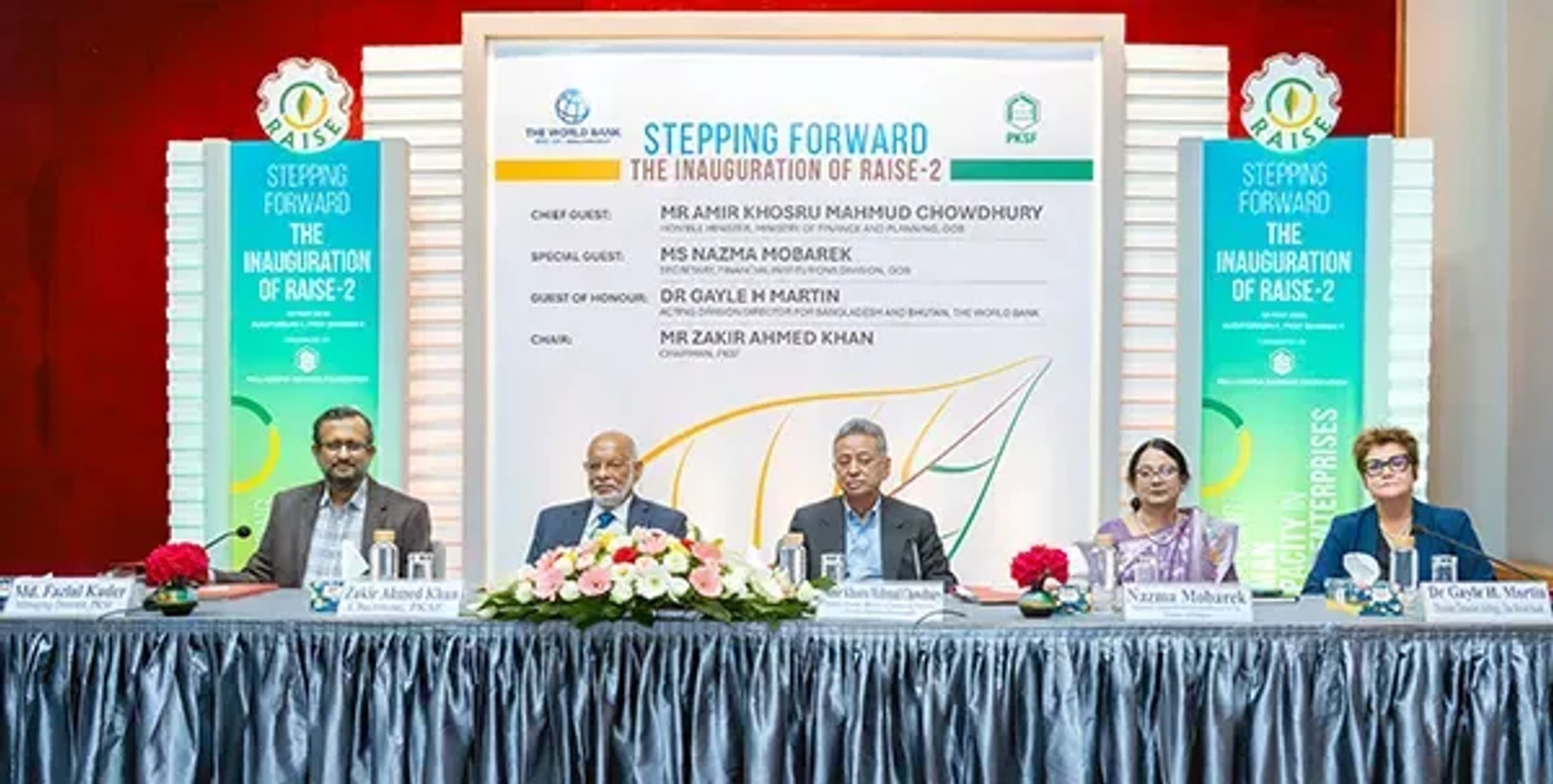
Bangladesh’s Finance Minister Amir Khasru Mahmud Chowdhury has stated that the government is prioritizing the concept of “democratization of the economy” to integrate marginalized communities into economic activities, moving them beyond the confines of the formal economic system. He made these remarks on Thursday at the inauguration of the second phase of the ‘Raise’ project, a joint initiative between the Pallie Karmo Sahayak Foundation (PKSF) and the World Bank, aimed at rural development in the capital’s Agargaon area.
Chowdhury emphasized that ensuring economic participation for all citizens is a goal of the government, extending beyond mere political inclusion. He added that creating a democratic environment in the economic sector is essential, reflecting the administration’s policy and strategic direction.
Highlighting the importance of adhering to established standards in project implementation, Chowdhury noted that only projects meeting these criteria will be approved. He commended PKSF’s role in rural development, stating that the institution plays a crucial part in uplifting the informal sector. The minister also pledged to consider expanding such programs in the future.
Addressing the economic role of women, he observed that female heads of households possess strong financial management skills. This has led to initiatives like providing economic support to women through family cards, which will positively impact the rural economy. Similar efforts for farmers, he said, will introduce new dynamism into the agricultural sector.
Regarding healthcare and education spending, Chowdhury admitted that Bangladesh’s health expenditure is significantly higher than Afghanistan’s but requires adjustment. He assured that the upcoming budget will allocate funds to these sectors. He also mentioned that the country’s demographic dividend—its young population—remains largely untapped, and the government is committed to harnessing this potential.
The minister underscored the international market potential for traditional and cultural products, citing the example of how proper design and modern marketing strategies can dramatically increase the value of items like jute products. He urged Bangladesh to follow suit in utilizing digital platforms to promote its goods and culture globally.
Recognizing sports as a significant economic sector, Chowdhury said that sports events can contribute notably to GDP through spectator attendance and related economic activities. However, he noted, this sector also requires more attention.
Chowdhury concluded by emphasizing the need for strategic investment and long-term policies in every sector to propel Bangladesh’s economy forward. The event was chaired by PKSF Chairman Zakir Ahmed Khan and attended by Nazma Mobarak, Secretary of the Economic Affairs Division of the Ministry of Finance, as a special guest.
M.C.
বাংলায় মূল প্রতিবেদন পড়ুন · Read the original Bengali report