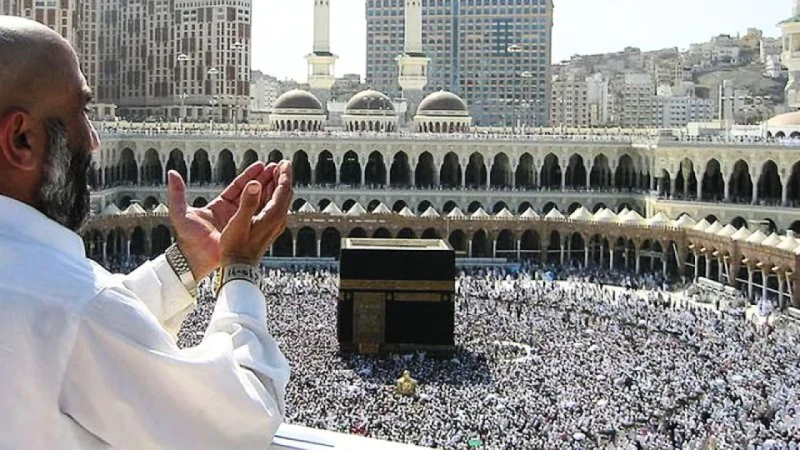
Preliminary registration for the 2027 hajj begins tomorrow, Monday, 27 July. The registration process will continue until 24 September.
Those wishing to perform hajj must complete preliminary registration within this period. Anyone can register through the e-hajj system. Final registration must then be completed by paying the money.
The Ministry of Religious Affairs announced this schedule in line with the roadmap for hajj activities declared by the Saudi Ministry of Hajj and Umrah.
Those wishing to perform hajj must have a valid passport. People suffering from complex illnesses or who are physically at risk will not be able to go on hajj.
The money needed for registration
Preliminary hajj registration can be done through either the government or private channel by depositing 3.5 lakh taka. Those with preliminary registration must complete final registration by paying the remaining amount of the package price by 10 December this year. Before preliminary registration, pilgrims must compulsorily complete pre-registration by paying 30,000 taka.
Where registration can be done
Through the government channel, anyone can register themselves by creating a user account in the e-hajj system (hajj.gov.bd). In addition, hajj registration can be done at union digital centres, the divisional and district offices of the Islamic Foundation, district and upazila model mosques, the Islamic Foundation’s Baitul Mukarram office and the Dhaka hajj office.
Those going on hajj through the government channel must complete preliminary registration by depositing the money by voucher at any branch of Sonali Bank.
Pilgrims going through the private channel, however, must deposit the money into the agency’s designated account at a bank connected with hajj activities. Information on an agency’s bank account can be found in that agency’s profile on the hajj portal.
Who will not be able to go on hajj
No one under 15 years of age will be able to go on hajj. In addition, people suffering from incurable illnesses — such as heart, lung, liver or kidney disease, neurological or mental illness and dementia — and cancer patients receiving chemotherapy, biological therapy or radiotherapy will not be able to go on hajj.
People with active infectious diseases that affect public health, such as tuberculosis and haemorrhagic fever, will also not be able to go on hajj. No woman pilgrim in the last two months of pregnancy or in a high-risk pregnancy will be given a fitness certificate.
At the time of preliminary registration, pilgrims must compulsorily select the district for training and vaccination, the type of hajj and the hajj package. A passport valid until 31 December 2027 will also be required.
বাংলায় মূল প্রতিবেদন পড়ুন · Read the original Bengali report