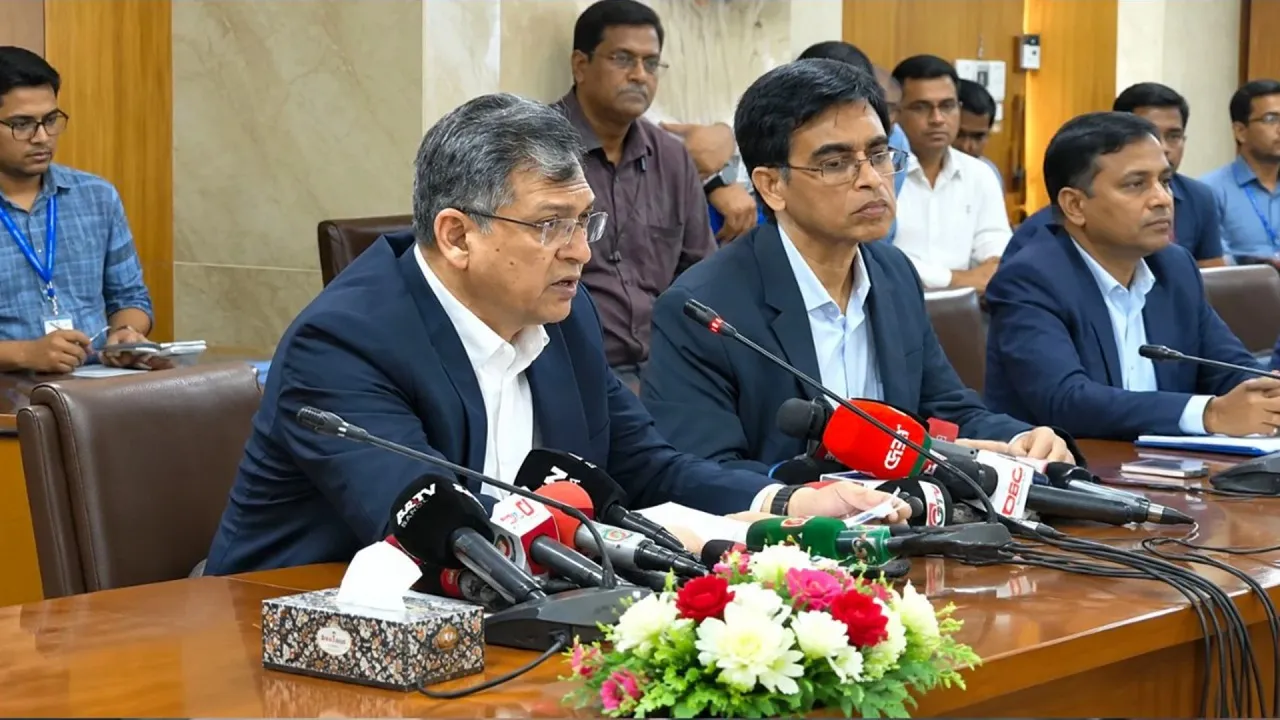
Home Minister Salahuddin Ahmed said the proposed Cyber Security (Amendment) Act 2026 would not be allowed to become repressive and that the government was taking maximum care to prevent misuse against journalists or media organizations. He said the law would be finalized after broad consultation with stakeholders.
He spoke Monday, Sept. 28, after a consultation meeting at the Information and Broadcasting Ministry’s conference room at the Secretariat.
Ahmed said it was the government’s second meeting with editors and representatives of major print and electronic media outlets, prominent journalists, newspaper organizations and journalists’ professional bodies.
He said the draft bill to amend the Cyber Security Act had previously been placed before the Cabinet, which instructed officials to hold broad discussions with information technology experts working in cyberspace and all relevant stakeholders.
Ahmed said the draft was published online to gather views from all parts of society and prevent it from becoming an oppressive tool. Institutions, human rights groups, students and internet users have submitted comments, which the government has compiled.
At the first meeting with editors on Sept. 10, participants agreed to provide clear written opinions at the next meeting or submit them online. Several participants summarized their views at Monday’s meeting and promised written submissions.
Ahmed cited a proposal from Mahfuz Anam, editor of The Daily Star, for more time and detailed talks involving media and cyber experts so that the media would not be harmed and necessary safeguards could be included in the law.
The government accepted the proposal, Ahmed said, adding that the law was not intended to target the media and that preventing its misuse against journalists was a central goal.
Ahmed said another proposal would require prior court approval before action is taken against or a journalist is arrested. The government considered the proposal appropriate and reasonable and would add it to the bill after receiving formal recommendations from stakeholders within 15 days.
He said the bill would also set deadlines so that no one remained indefinitely caught in the disposal of a case or appeal.
A special coordination structure will be formed to finalize the draft, with the principal information officer given central responsibility for coordination and receiving consultations.
The Posts, Telecommunications and Information Technology Ministry and the Information and Broadcasting Ministry will jointly coordinate the process. Representatives of the Editors Council and electronic media organizations will participate along with a special panel of cyber experts formed by the Information Technology Ministry.
Ahmed said the representatives would provide specific recommendations within 7 to 15 days. After 15 days, the ministries and committee members would meet jointly to make decisions.
The revised draft will be published online again before being sent to the Cabinet, allowing the public and stakeholders another opportunity to comment. Acceptable comments will be incorporated.
After a final review at an inter-ministerial meeting, the bill will be presented to the Cabinet for approval and then placed before Parliament if approved.
Ahmed said Parliament would not rush passage of the bill. A final decision would follow debate involving government and opposition parties as well as views from seminars and symposiums outside Parliament.
He said the government wanted a balanced law that would protect the country, society and especially young people from cybercrime and other criminal activity spreading like an infectious disease. The law would also seek to protect social and religious harmony, family ties and local culture while aligning with international standards.
বাংলায় মূল প্রতিবেদন পড়ুন · Read the original Bengali report