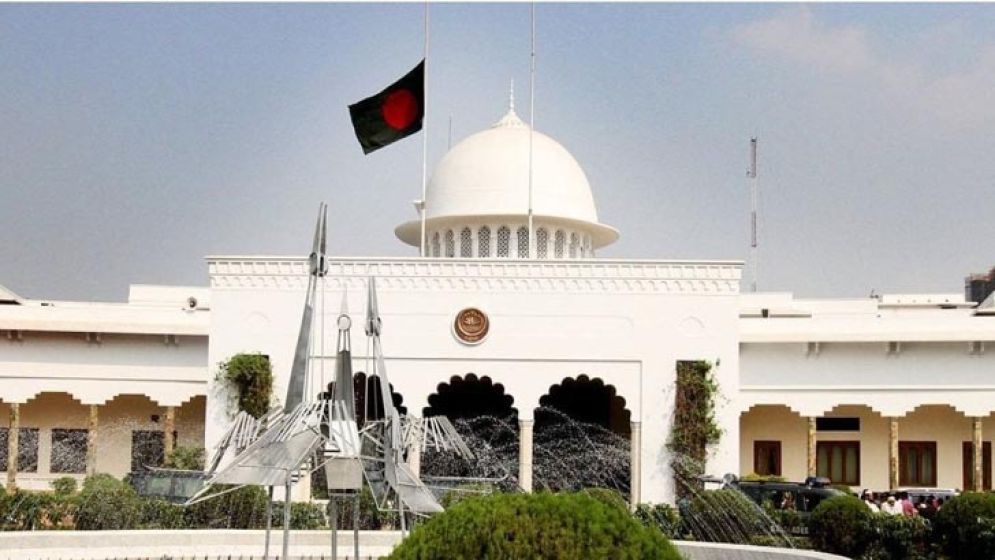
Bangladesh’s president holds the country’s highest constitutional office. The constitution places the president above every other individual in the state. However, under the parliamentary system of government, while the president is head of state, they are not head of government. The center of the government’s executive power rests with the prime minister and the cabinet.
As a result, while the presidency ranks highest in dignity and ceremonial importance, its actual executive power is comparatively limited. Under the constitution, the president holds independent constitutional authority in appointing the prime minister and the chief justice. Beyond that, in carrying out most other responsibilities, the president must act on the prime minister’s advice.
In this election, the ruling BNP’s candidate, the party’s recently outgoing secretary general Mirza Fakhrul Islam Alamgir, received 255 votes. His rival, the candidate of the Jamaat-e-Islami-led 11-party alliance and chairman of the Liberal Democratic Party (LDP), Oli Ahmed, received 88 votes. Six members of parliament abstained from voting. Because the Jamaat-e-Islami-led 11-party alliance fielded a candidate, a vote for the presidency was held for the first time in 35 years. After voting concluded, the country’s 23rd president was elected: BNP’s candidate, the party’s recently outgoing secretary general, Mirza Fakhrul Islam Alamgir.
The presidency is the state’s highest constitutional office. The constitution places the president above every other individual in the state. The state’s formal proceedings are conducted in the president’s name. However, under the parliamentary system of government, the presidency is essentially the office of head of state, not head of government. As a result, while the office carries great dignity and ceremonial weight, its executive power does not match that stature. Many are now curious: how much power does Bangladesh’s president actually hold, and what benefits does the office come with?
Under the constitution, the president holds independent constitutional power in appointing the prime minister and the chief justice. Beyond that, the president must act on the prime minister’s advice in carrying out nearly all other duties. However, the president is entitled to a range of facilities, including a grand official residence at Bangabhaban, salary and allowances, transport, medical care, and hospitality funds. Even after leaving office, former presidents retain certain benefits.
Two areas of independent presidential power
Under Article 48(3) of the constitution, the president is not bound by the prime minister’s advice in two important areas: appointing the prime minister, and appointing the chief justice.
When a party wins a majority in the national parliamentary election, the president generally appoints that party’s parliamentary leader as prime minister. However, if no party wins a clear majority, the president’s constitutional role in determining who can form a government can become significant. The president also holds independent constitutional power in appointing the chief justice. On the other hand, the prime minister is required to keep the president informed on matters of state and foreign policy. If the president wishes to refer any matter for the cabinet’s consideration, the prime minister presents it to the cabinet.
However, no court may inquire into whether the prime minister has given the president any advice, or what advice was given.
Power to grant clemency
One of the president’s most notable powers is the authority to pardon, suspend, reduce or remit a sentence. This power is set out in Article 49 of the constitution. The president may, within a defined constitutional framework, pardon or reduce a sentence handed down by any court, tribunal or other authority.
Presidential immunity
The president enjoys constitutional immunity while carrying out their duties. No criminal case can be filed against the president in any court during their term. No court may issue a warrant to arrest the president or send them to prison.
However, the president is not entirely beyond removal. On grounds of violating the constitution or gross misconduct, the president can be impeached through a parliamentary process. There is also a provision for removal on grounds of physical or mental incapacity.
For impeachment, a signed complaint from members of parliament must be submitted to the speaker. The president is given the opportunity to defend themselves. The president’s office falls vacant if the motion then passes with the votes of at least two-thirds of parliament’s total membership.
For physical or mental incapacity as well, a defined parliamentary process must be followed, and there is a provision for the president’s health to be examined by a board of doctors. A notable instance of a move to impeach a Bangladeshi president involves A Q M Badruddoza Chowdhury. In 2002, during the BNP-led government’s tenure, moves toward his impeachment led him to resign.
Five-year term
The president’s term is five years. However, the president remains in office until a successor takes charge. The same individual may serve as president for a maximum of two terms. In Bangladesh’s history, Abdul Hamid served two consecutive terms as president.
A sitting member of parliament is not eligible to remain president. If a sitting MP is elected president, their parliamentary seat falls vacant on the day they assume office. Similarly, the minimum age to become president is 35, and the individual must be qualified to be elected a member of parliament. However, being a sitting MP is not a mandatory requirement to run for president.
Anyone previously removed from the presidency through impeachment cannot become president again.
How the president is elected
In Bangladesh, the president is not elected by direct popular vote. Members of the national parliament elect the president.
One member of parliament proposes a candidate’s name, and another seconds it. If there is only one valid candidate, that person is declared elected. If there is more than one candidate, the individual receiving the most votes from members of parliament is elected president. In the event of a tie, the constitution provides for the result to be determined by lottery.
The Election Commission oversees the entire presidential election process, with the Chief Election Commissioner serving as the returning officer.
Monthly salary: Tk 120,000
The president’s financial benefits are set out in the Presidents (Remuneration and Privileges) (Amendment) Act. The president currently draws a monthly salary of Tk 120,000. This salary is tax-free. The president’s salary was last increased in 2016. Before that, the monthly salary was Tk 61,200.
The prime minister’s monthly salary is Tk 115,000. However, upon retiring from office, the prime minister generally does not receive the same government benefits as the president. Certain government benefits remain available to a former president even after leaving office.
There is also an annual allowance for the president’s hospitality or entertainment expenses, and this spending is not audited.
Bangabhaban, vehicles and other government facilities
The president’s official residence is Bangabhaban. Necessary expenses, including the building’s upkeep and maintenance, are borne by the state treasury. The president is provided with a vehicle and necessary transport facilities for carrying out official duties. During official trips abroad, the president also receives an allowance at a government-set rate.
A Tk 20 million annual discretionary fund
The president has a discretionary fund. This fund amounts to Tk 20 million a year. At the president’s discretion, this money can be spent to assist various individuals or institutions.
There are also special medical facilities for the president and their family members. They can receive treatment free of charge at any hospital in the country. If treatment abroad is required on a doctor’s advice, the government also bears that expense.
The president has flight insurance coverage for air travel, currently amounting to Tk 2.7 million a year. Before 2016, this benefit stood at Tk 1.5 million.
In other words, alongside salary, the president is entitled to various state facilities to carry out their duties, including residence, vehicle, medical care, foreign-travel allowance, hospitality, and flight insurance.
Head of state, not head of government
The most important point in understanding the president’s power is that, while the president is the state’s highest constitutional figure, they are not the head of the government. Under the parliamentary system of government, the government’s executive power rests with the prime minister and the cabinet.
When a party wins a clear majority in parliament, the president’s scope for political decision-making is comparatively limited. But if no party wins an outright majority, the president’s constitutional role in government formation can become significant.
If the presidency falls vacant, or if the president is unable to carry out their duties, the speaker performs the president’s duties until a new president takes office. This arrangement ensures the constitutional continuity of the office of head of state.
While Bangladesh’s presidency ranks highest in dignity and constitutional importance, its executive power is limited under the parliamentary system. The president’s principal role is to carry out constitutional duties as head of state, while the government’s effective executive power rests mainly with the prime minister and the cabinet.
বাংলায় মূল প্রতিবেদন পড়ুন · Read the original Bengali report