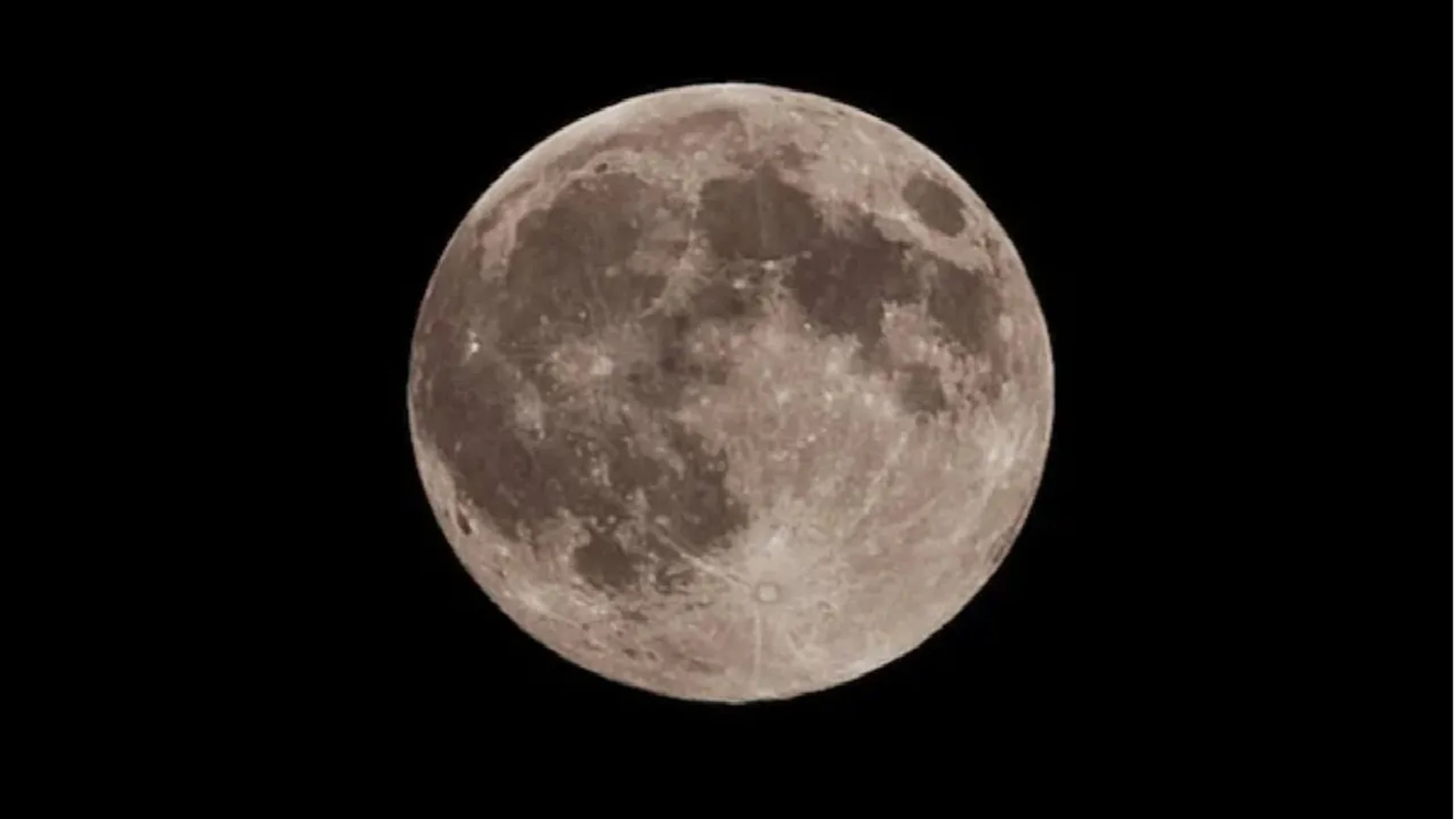
A rare full moon will be visible in the night sky this weekend, looking somewhat smaller and less bright than at other times of the year. Astronomers are calling the event a “blue micromoon.” It is created by two events at once — the second full moon of the month and the moon being at its farthest point from Earth.
A “blue moon” refers to the second full moon in a single month, while a “micromoon” is seen when the moon is at its farthest from Earth during a full moon, making it look somewhat smaller and dimmer than usual.
The astronomy outlet Science Alert said the full moon will be seen most clearly at 8:45 p.m. world time on May 31, when the moon will be about 252,360 miles from Earth — making it appear about 6 percent smaller and about 10 percent dimmer than an ordinary full moon.
Experts say a “blue moon” generally occurs every two to three years, because one full lunar cycle takes about 29 days and 12 hours, which does not align exactly with the calendar month.
Despite the word “blue” in the name, the moon will not actually be blue; it will appear white, or somewhat golden-orange, like an ordinary full moon.
The sight may be even more beautiful in the southern hemisphere and the Pacific region, where the moon will be seen passing very close to Antares, the bright red star of the Scorpius constellation. It will also be possible to see the moon near that star from the northern hemisphere. Astronomers say the rare full moon can be seen with the naked eye, though binoculars will show the moon’s surface more clearly.
বাংলায় মূল প্রতিবেদন পড়ুন · Read the original Bengali report