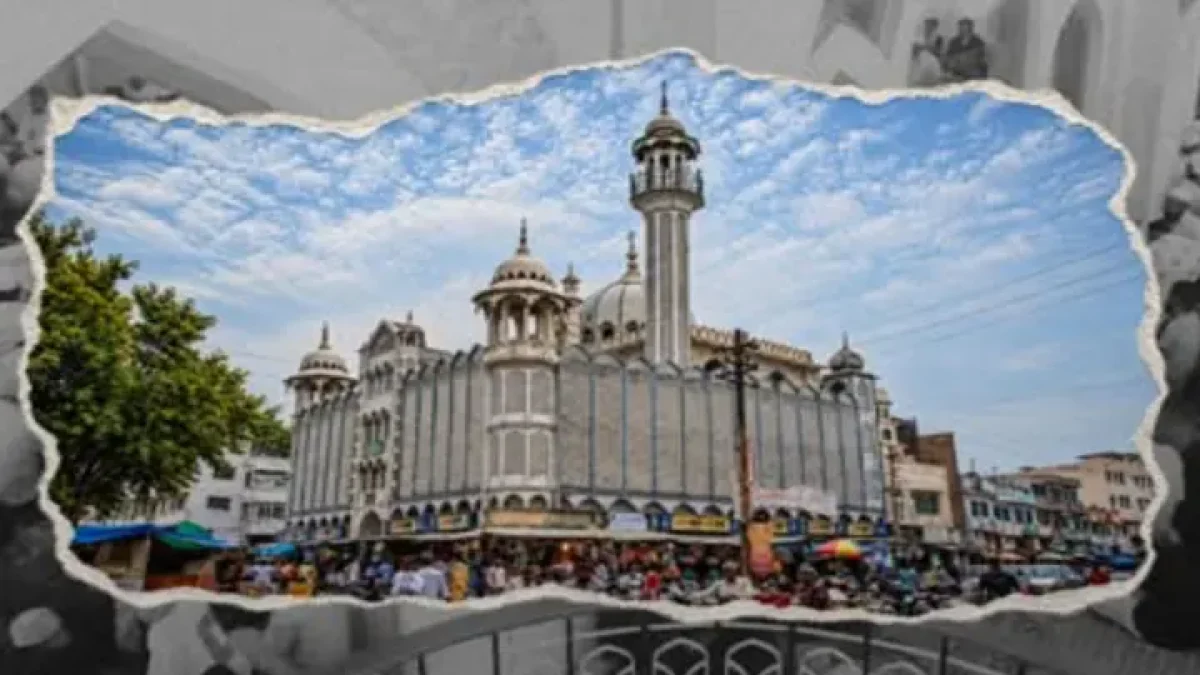
Hundreds of Muslims spent the night inside and outside the more than 600-year-old Shahi Mosque in Ujjain, Madhya Pradesh, protesting plans to demolish part of it. Participants said their protest to protect the mosque was peaceful.
Indore cleric Mufti Junaid said the issue carried wider risks, claiming that partial demolition of the Shahi Mosque could place another 28 mosques in Ujjain under similar threat. He alleged that old mosques were being endangered by urban redesign ahead of the Simhastha Kumbh.
Imam Mohammad Ibrahim said the mosque dated to 1390 and was about 636 years old. Its managers said old government records supported its historical existence.
All India Majlis-e-Ittehadul Muslimeen chief Asaduddin Owaisi described the movement as Gandhian and nonviolent, saying religious structures should not be demolished in this way.
Bulldozers remained outside the mosque Sunday night. Local Muslims had occupied the grounds in shifts for several weeks to prevent possible eviction and demolition, and attendance increased Sunday. Authorities deployed large numbers of police and kept Rapid Action Force and other security personnel ready. Residents said demolition did not proceed that night because so many people were inside and outside the mosque.
Residents said the action was not spontaneous. They had stayed in shifts for weeks, with large numbers gathering to protect the mosque while continuing the five daily prayers.
The mosque stands nearly opposite the Mahakaleshwar Temple and close to the Kshipra River. The Ujjain Municipal Corporation plans to widen the road in preparation for the 2028 Simhastha Kumbh. The road is planned to be 15 meters wide, and parts of the mosque fall within the project area.
The proposed removal includes part of the prayer hall, a minaret about 120 feet high and an area known as Mazhar Chowk Shahi. Mosque managers challenged the legality in court, arguing that the road could be widened through an alternative alignment that spared the religious structure.
Authorities say widening is necessary for traffic and public access ahead of the large number of pilgrims expected for the 2028 Simhastha Kumbh. The Madhya Pradesh High Court also considered road expansion, traffic management and pilgrim needs in its ruling.
The High Court rejected two earlier petitions challenging demolition. A single bench led by Justice Sandeep N Bhatt said municipal authorities followed applicable legal provisions and gave mosque managers an opportunity to present their case. The court also rejected allegations of violations of constitutional Articles 14, 25, 26 and 300A.
The mosque authorities have filed a new appeal before a higher bench, with a hearing scheduled Monday. Further demolition activity therefore also depends on the new court hearing.
The Muslim side said a previous dispute over official promises after the demolition of Ujjain’s Takhiya Mosque influenced the decision to occupy the Shahi Mosque directly this time.
Barricades were installed around the mosque and more than 600 police, Rapid Action Force and special force personnel were present in the area.
Partial demolition remained suspended as Muslims continued their sit-in inside and outside the mosque and pursued legal action. The dispute now involves not only a road project but also the historical status of an old religious structure, urban development, preservation and court decisions.
Monday’s hearing and the authorities’ next move will determine whether the disputed parts are removed. Tensions remain high in Ujjain while the occupation continues.
বাংলায় মূল প্রতিবেদন পড়ুন · Read the original Bengali report