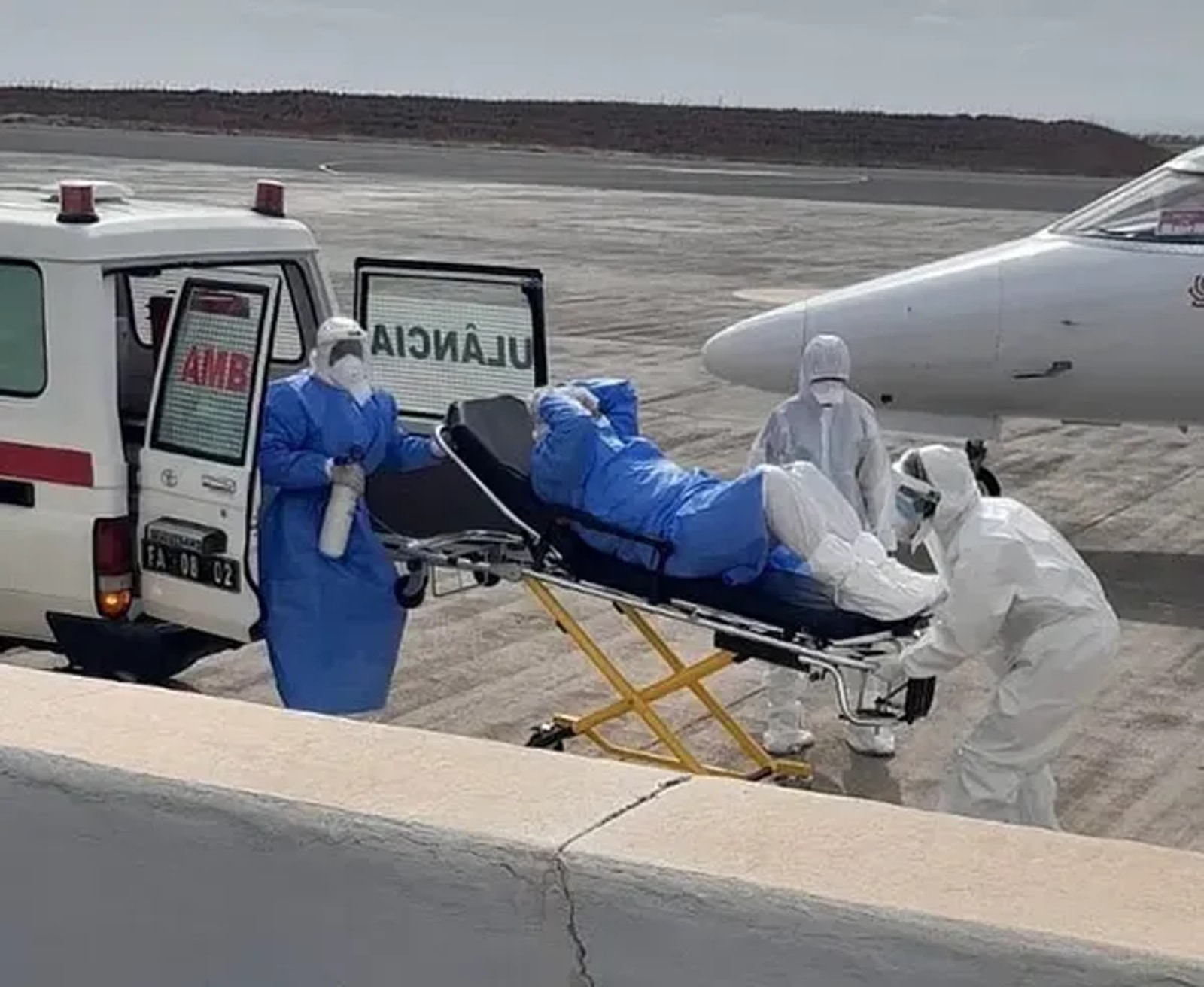
An urgent global effort is underway to contain the spread of the rodent-borne, potentially deadly hantavirus, with passengers who disembarked from an affected luxury cruise ship now feared to have traveled to multiple countries, raising concern that hundreds of people may have been exposed, online Daily Mail reported.
The cruise ship MV Hondius has been at the center of an international health scare since Saturday, after an outbreak of rare hantavirus infections was detected on board.
Although the disease typically spreads through rodent urine, feces and saliva, the World Health Organization (WHO) confirmed that the virus responsible for the outbreak is a rare “Andes” strain of hantavirus, the only known hantavirus believed to spread from person to person.
The WHO is trying to determine how the virus reached the ship. The first person to die, a 70-year-old Dutch national, fell ill on April 6 and died on April 11 while the ship was heading toward Tristan da Cunha. Oceanwide Expeditions said his body was kept on board until April 24, when it was offloaded on St. Helena. It is believed that 23 other passengers disembarked at the time and later took various international flights.
The WHO confirmed that a woman boarded an Airlink flight to Johannesburg on April 25. The flight carried 82 passengers and six crew. While displaying severe symptoms, she then boarded another flight from Johannesburg to the Netherlands, but crew members removed her from that flight as her condition worsened. Health officials are now trying to trace at least 80 passengers who shared a flight with her.
On April 27, a British cruise passenger became seriously ill and was taken from Ascension Island to South Africa for treatment. A few days later, another passenger, a German national, died.
On May 3, the MV Hondius arrived in Cape Verde but was not allowed to dock, leaving the passengers effectively stranded at sea. Three patients have since been taken to hospitals in the Netherlands. A passenger in Switzerland has been hospitalized. Two British passengers who returned home from St. Helena are now self-isolating in Britain.
According to British government guidance, symptoms of the virus usually appear two to four weeks after exposure, but the incubation period can range from two days to eight weeks. More passengers may fall ill in the coming days and weeks, officials said.
According to the Centers for Disease Control and Prevention (CDC), about 40 percent of those infected die. In an outbreak of the Andes virus in the town of Epuyén in Argentina’s Chubut province in 2018 and 2019, the transmission rate was 2.2, meaning one infected person on average spread the virus to more than two others.
On Thursday morning, authorities confirmed that an Australian national who had been on the ship also disembarked on St. Helena on April 21 and returned home.
বাংলায় মূল প্রতিবেদন পড়ুন · Read the original Bengali report