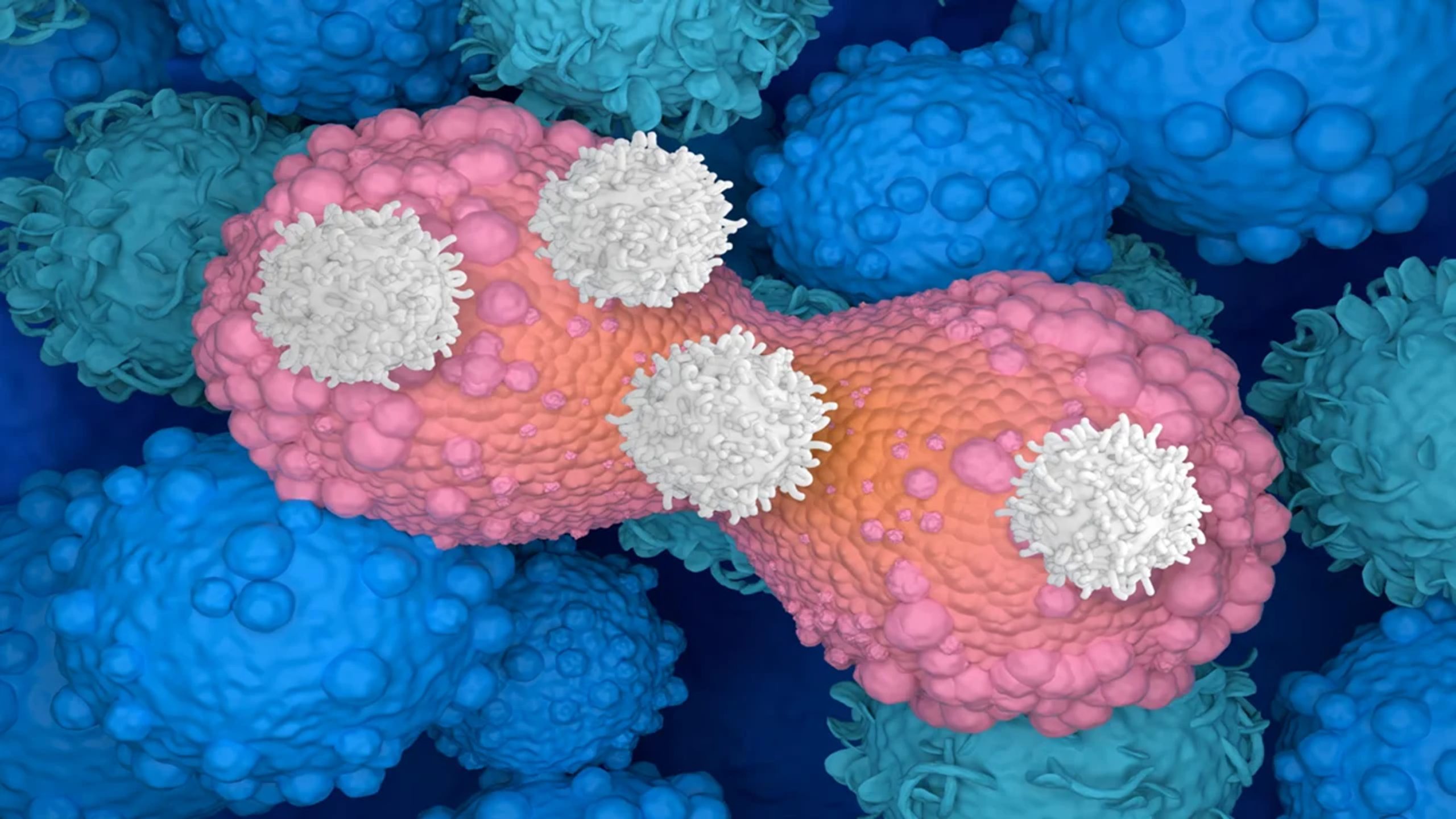
Researchers have signaled a breakthrough in cancer treatment. A new study points to fresh hope in the form of a “smart drug” that strips cancer cells of their ability to hide, helping to make immunotherapy more effective. Early tests showed the drug could shrink tumors by at least 30 percent.
According to the researchers, cancer cells usually evade the body’s immune system by making themselves “invisible.” The new drug breaks that invisibility, or “invisibility cloak,” allowing the body’s defenses to detect and destroy the cancer cells more easily.
Positive results in six types of cancer
Eighty-three patients took part in a clinical trial conducted in the United Kingdom, France, Spain and Australia. They had cancers of the uterus, bladder, liver, bowel, lung, and head and neck.
The patients were given the experimental drug GRWD5769, used in combination with the immunotherapy drug cemiplimab.
The study found that tumors shrank in 26 patients, and in 15 of them the tumors shrank by at least 30 percent.
All the patients in the study had previously failed to respond to conventional treatment, and for many there was no other treatment option left. Notably, the drug also worked in patients for whom immunotherapy had not worked before or had later stopped working.
How the drug works
Cancer cells typically hide from the immune system by altering an enzyme called ERAP1 (endoplasmic reticulum aminopeptidase 1). The new drug blocks this enzyme, breaking the cancer cell’s “invisibility shield” so that T-cells can identify and destroy the cells more easily.
Experts react
Professor Fiona Thistlethwaite, the lead researcher, said that because it was taken by mouth the drug was easier for patients, and that very encouraging results had been seen at this early stage.
Another researcher, Professor Stefan Symeonides, called it an “exciting advance.”
Experts said that although this was still early-stage research, obtaining positive results across several different hard-to-treat cancers at once was extremely rare.
The researchers said the drug was still undergoing larger-scale testing. If it succeeds in the future, it could significantly increase the effectiveness of immunotherapy for many patients.
Source: The Guardian
বাংলায় মূল প্রতিবেদন পড়ুন · Read the original Bengali report