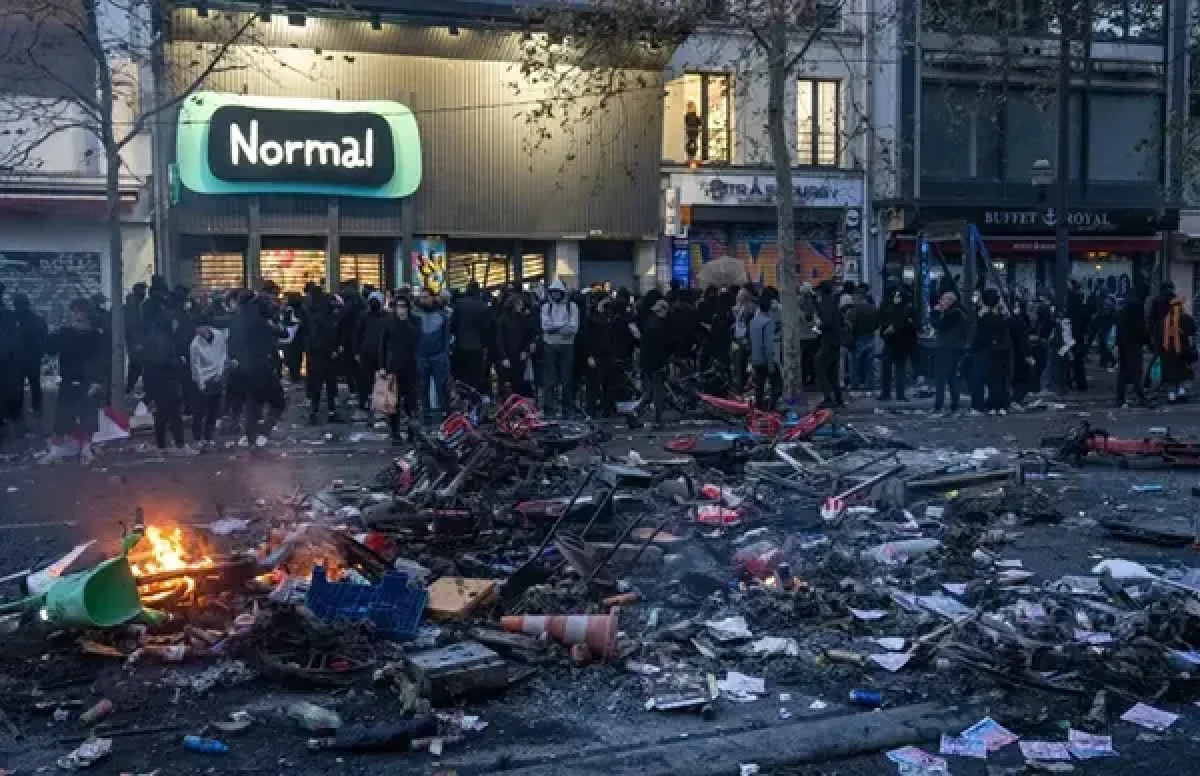
President Emmanuel Macron’s popularity has fallen to a record low, and his centrist camp now faces challenges from the left and the right ahead of the 2027 presidential election. After protests across the country turned violent, the French president on Sunday night acknowledged the concerns of students campaigning for changes to the education system, while trying to strike a balance by criticising the rioters.
But Yanis, 20, did not want to hear it. He lives in the suburb of Ivry-sur-Seine, just south-east of Paris. Macron gave his usual kind of speech but made no concrete proposals, Yanis said.
“We will take to the streets again. Until something changes, there will be one protest after another, every weekend, without a break,” he said, Al Jazeera reported online in a review of the situation in France.
Last weekend’s violent protests brought widespread pent-up anger in France into the open. Interest among the country’s young people in the centrist politics Macron represents appears to be falling fast. Coming months before the 2027 presidential election, the unrest has sharpened France’s political divisions, and parties are trying to present themselves as the answer to the frustration on the streets.
Populist left-wing leader Jean-Luc Melenchon has eagerly backed the student movement. Far-right leader Marine Le Pen, by contrast, has stressed the disorder linked to the protests, framing it as a crisis of security and authority. Centrist Prime Minister Sebastien Lecornu has accused the radical left of stoking violence as a “dress rehearsal” for the presidential election.
Polls ahead of the election point to a contest in which both the far left and the far right could play a major role. But while demands for change are growing across the country, there is no consensus on what that change should look like. Macron, who has served two terms, must step down after the next election.
Under France’s constitution he cannot run for a third term. Beligh Nabli, a professor of public law at UPEC, known as the University of Paris-12, and a political analyst, said candidates have no choice but to take a position and respond to young people’s demands. Speaking to the young is their political duty, he said, and the message cannot be hollow; it must answer their demands.
Since the protests began in mid-September, students have been calling for better schools, more teachers and a fairer education system. But the movement quickly spread from school grounds to the streets, bringing wider social and economic concerns to the fore.
Analysts say young people’s problems are usually not at the centre of political debate because of their relatively low turnout and because campaigns focus more on issues such as pensions and on older voters. This round of protests has put those problems at the centre of the political conversation.
বাংলায় মূল প্রতিবেদন পড়ুন · Read the original Bengali report