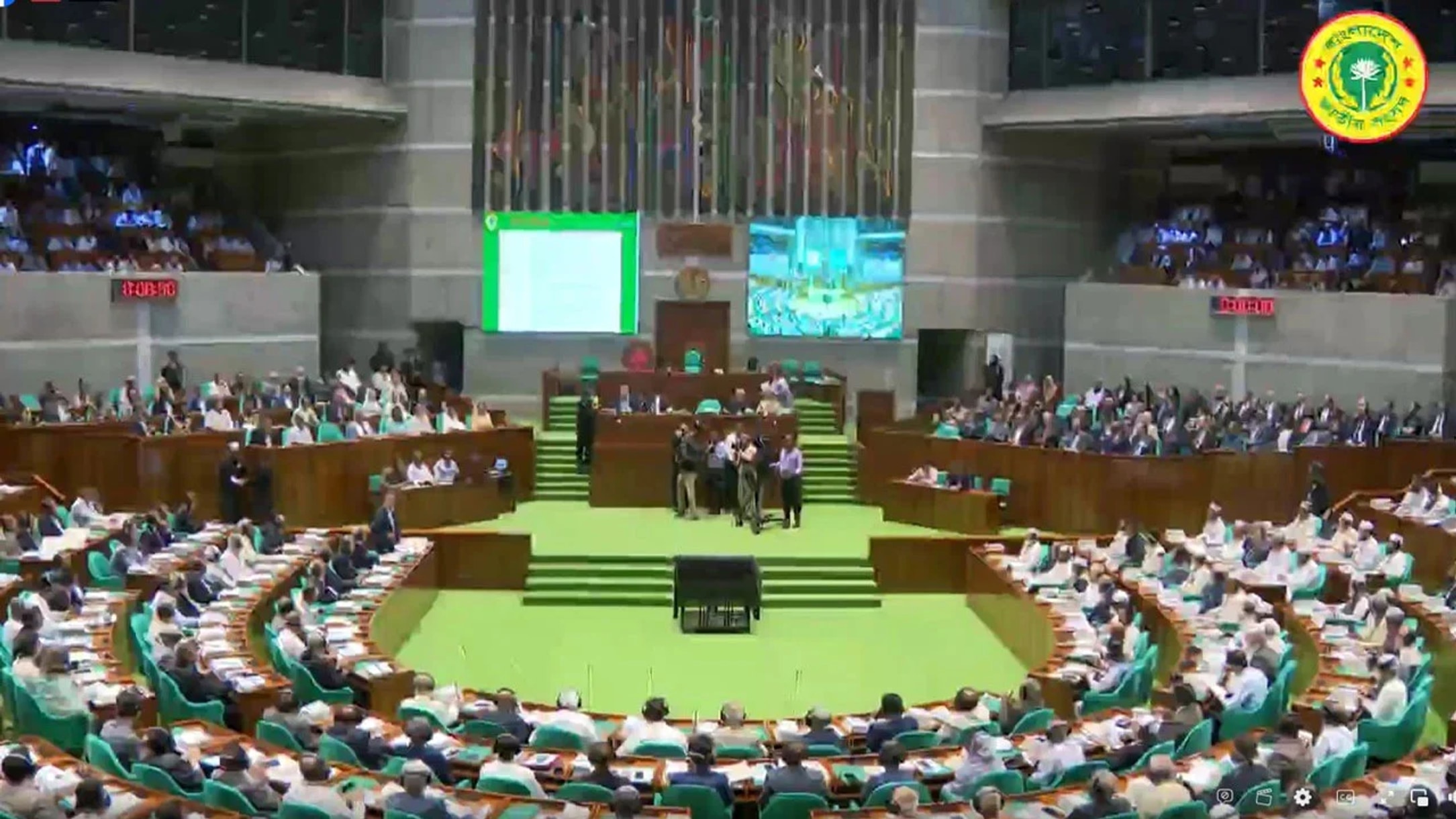
DHAKA — Voting in Bangladesh’s 13th general election was held in 299 constituencies on Feb. 12. Polling in Sherpur-3 was postponed days earlier following the death of a candidate. Election Commission data show that 86 women contested seats in those 299 constituencies, the commission said.
Only seven were elected — six from the BNP and one a BNP rebel candidate.
In Bangladesh’s parliament, members of the ruling party have typically dominated the reserved seats for women, with women candidates from opposition parties winning only in a handful of cases.
Reserved-seat MPs are chosen in proportion to each party’s share of the 300 constituencies.
Under the 2004 law on parliament’s reserved seats for women, a party that wins six elected MPs is entitled to one reserved-seat MP from among its members.
In such an election, multiple women candidates from a party can compete and win the reserved seat through the votes of that party’s elected MPs. The Election Commission announces the schedule and sets a polling date.
In recent elections, parties have nominated specific candidates in line with their seat share even after the Election Commission announced a schedule. As a result, candidates were declared elected unopposed on the day the deadline for withdrawing nominations passed.
How seats are likely to be allocated this time
The BNP contested the 13th parliamentary election as part of an alliance. The party won 209 seats on its own. Among its alliance partners, Ganaadhikar Parishad won one seat, Ganasanghati Andolan one and Bangladesh Jatiya Party-BJP one.
That gives the BNP alliance 212 of the 297 seats. Reserved seats will again be allocated by law on the basis of seat numbers.
With one reserved women’s seat assigned for every six general seats, the BNP alliance will receive at least 35 reserved seats. It could pick up one more once voting and results in the remaining three constituencies are finalized.
Jamaat-e-Islami also contested as part of an alliance. The party won 68 seats on its own, while the NCP won six, Bangladesh Khelafat Majlis two and Khelafat Majlis one.
By that count, election analysts say, the Jamaat-e-Islami alliance could receive 12 to 13 reserved seats against its 77 general seats.
Islami Andolan Bangladesh, which contested alone, won one seat. Independent candidates won seven seats. If they form an alliance, the independents could pick up at least one reserved seat.
How the reserved seats began
Bangladesh has held 13 general elections to its national parliament.
In the 1973 first general election, 15 seats were reserved for women. The number was increased in stages. The second parliament, elected in 1979, and the third, elected in 1986, each had 30 reserved seats. The fourth parliament, from 1988 to 1990, had none.
After the 1990 popular uprising, Bangladesh began its democratic phase. Khaleda Zia was elected prime minister in 1991. That parliament also had 30 reserved seats.
The BNP’s one-sided sixth general election in February 1996 again had 30 reserved seats. After that vote was annulled, the seventh parliamentary election was held that June, with the same 30 reserved seats for women.
In the eighth general election, the number of reserved women’s seats was raised to 45. The ninth parliament saw it raised to 50.
Even as the number of reserved seats was increased in stages, questions have been raised about how much women’s empowerment has been advanced, since the seats are filled indirectly.
Political analysts say women’s empowerment can be ensured only when reserved-seat MPs are elected directly by voters in a specific constituency. Otherwise, they say, women’s seats remain ornamental.
How reserved seats are distributed
Under current law, reserved-seat women members have no designated constituency. They are identified only as members of a party or alliance. Reserved seats are distributed on the basis of the seats a party or alliance wins. Successful independent candidates can also form an alliance and claim a share of the reserved seats.
The current number of reserved women’s seats is 50. Dividing 50 by 300, the number of general constituencies, gives a ratio that is multiplied by the number of members a party or alliance has sworn in. The result is the number of reserved-seat members for that party or alliance. If the result is a fraction, a value of 0.5 or higher gives an additional seat. So 0.5 or more counts as one; less than 0.5 counts as zero. If the total allocated under this rule exceeds the cap of 50, the fractions are adjusted. In some cases, the law also provides for a lottery.
As an example: Jamaat-e-Islami won 68 seats this time. Under the formula, the party should receive 11 reserved women’s seats. [50 / 300 = 0.1667. Then 68 x 0.1667 = 11.336.] Here the 0.336 fraction counts as zero.
বাংলায় মূল প্রতিবেদন পড়ুন · Read the original Bengali report