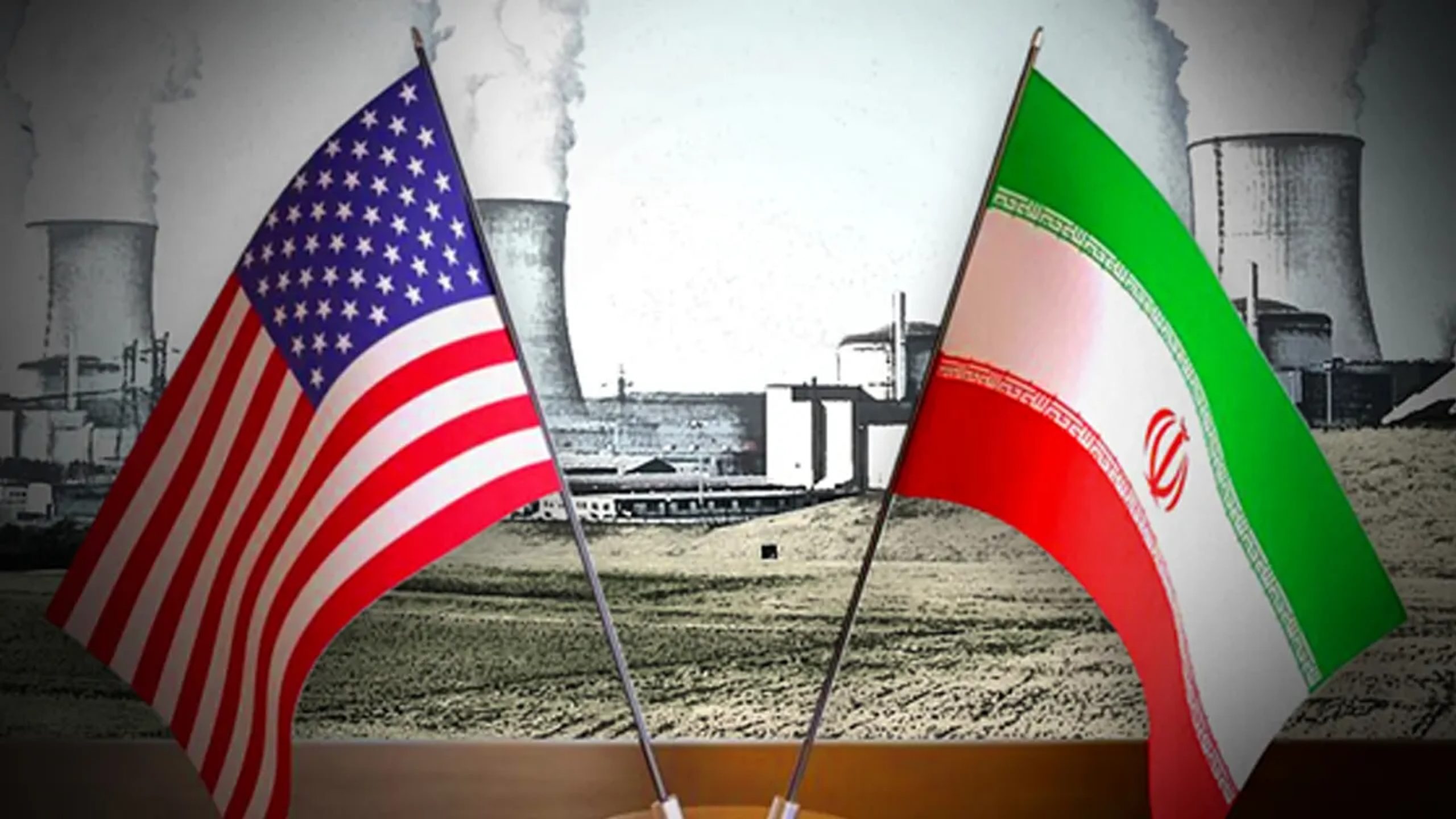
WASHINGTON — The United States proposed during talks in Islamabad, Pakistan, that Iran suspend its uranium enrichment program for 20 years. Iran rejected the proposal and countered with a five-year suspension. At one point during the Islamabad talks, the two sides’ representatives also exchanged sharp words.
The New York Times reported the information, citing Iranian and U.S. officials.
The report said the United States and Iran had exchanged proposals on suspending Tehran’s nuclear activities during the Pakistan talks, but that a wide gap remained between them on reaching an agreement.
The direction of the talks suggests, however, that a path to a peace agreement may still be open, and that a second round of direct talks is possible. Iran’s nuclear program is one of the main unresolved issues in this conflict.
Warning on the issue, Donald Trump on Sunday reiterated that the United States would ensure that Iran could never build nuclear weapons.
The New York Times said the main obstacle in the Iran-U.S. talks in Pakistan had been the disagreement over Tehran’s nuclear program.
Washington proposed a 20-year suspension of Iran’s uranium enrichment, while Tehran said it was prepared to do so for only five years, according to reports in The New York Times and The Wall Street Journal.
According to the report, although the two countries exchanged proposals on suspending nuclear activity at the Islamabad meeting, they are far apart on the length of any deal.
Citing two Iranian officials and one U.S. official, The New York Times said Tehran offered five years while the Trump administration held out for 20 years.
The proposal suggests the Trump administration has shifted significantly from its earlier stance. Previously, it had insisted that Tehran must permanently halt its nuclear enrichment.
Political analyst Ian Bremmer said that despite the disagreement, the United States and Iran may ultimately reach a deal to suspend uranium enrichment for 12 and a half years.
This was the first direct meeting between Washington and Tehran in the past decade and the highest-level negotiation since the 1979 Islamic Revolution.
Although the Islamabad meeting ended in a stalemate over nuclear activity, officials said dialogue was continuing. Even with the U.S. military starting a blockade of Iranian ports on Monday, a path to a peace agreement could still be created, they said.
Inside the talks
According to Reuters, the talks were held in two separate rooms and a common room at the luxury Serena Hotel in Islamabad. To maintain security, phone use was not allowed in the main room. U.S. Vice President JD Vance and Iranian parliament Speaker Mohammad Bagher Qalibaf were seen during breaks standing on the balcony to send messages to their home countries.
A Pakistani government source said, “In the middle of the talks there was strong hope of a major breakthrough. But the situation changed very quickly.”
About 20 hours into the talks, when the subject of guarantees came up — specifically a pledge of no attack and the lifting of sanctions — Iranian Foreign Minister Abbas Araghchi spoke in unusually sharp terms.
He asked: “How can we trust you when, at the last Geneva meeting, you said the United States would not attack while diplomacy was under way?”
U.S.-Israeli strikes on Iran began two days after the Geneva talks.
The two sides also differed on issues such as opening the Strait of Hormuz and international sanctions. Washington focused only on the nuclear file and the Strait of Hormuz, while Tehran sought a broader settlement.
At one point, raised voices were heard in the conference room and Pakistani mediating officials called a tea break and moved the two sides to separate rooms.
A source involved in the talks told Reuters that the negotiations had been “about 80%” successful but stalled on certain issues on which immediate decisions were not possible.
U.S. President Donald Trump said Monday that Iran had called in the morning and that “they want to make a deal.”
White House spokeswoman Olivia Wells said the U.S. position is unchanged — Iran will never get a nuclear weapon, and the Trump team is firm on this “red line.” But contacts to reach a deal are continuing, she said.
বাংলায় মূল প্রতিবেদন পড়ুন · Read the original Bengali report