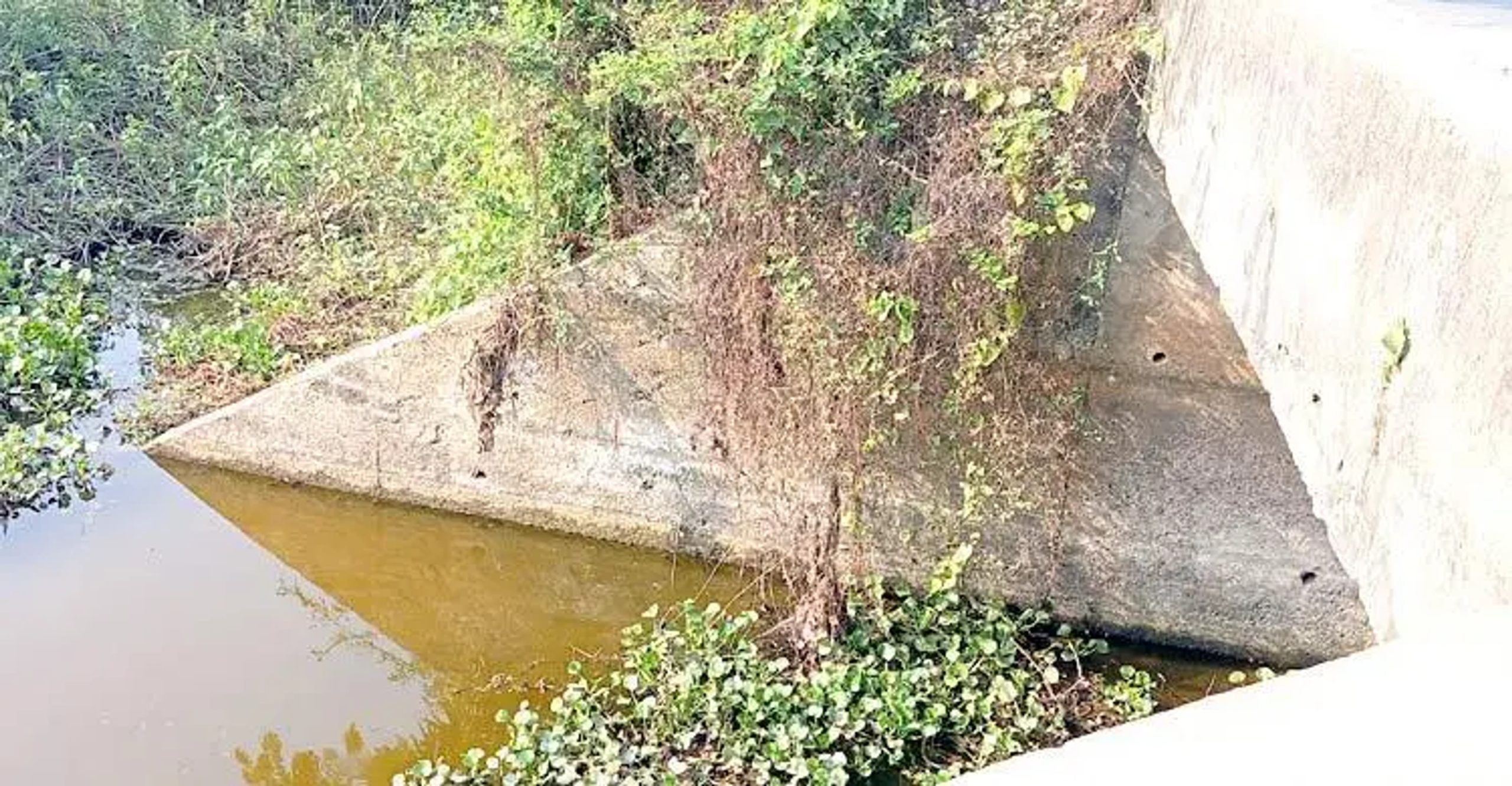
TEROKHADA, Khulna — Sluice gates in Khulna’s Terokhada upazila have stopped working for lack of maintenance and repair, and the canals are nearly dead. With water no longer flowing and waterlogging spreading in some places, farmers worry about their crops.
Terokhada upazila covers 18,769 hectares. About 150,000 people live across its six unions, and roughly 80 percent of them work in agriculture. The area sits in a monsoon climate zone made up of the Ganges floodplain, the Ganges tidal floodplain and the Gopalganj-Khulna peat soils of the bils. Cultivation is mainly rain-dependent, but farmers are now growing modern boro rice varieties with irrigation.
Rivers and canals are the upazila’s main water sources. The water in those rivers and canals turns saline for three to four months each year, and during that time the sluice gates play a key role in blocking the inflow of saltwater. The canals are connected to the rivers through these sluice gates. But because the canals and sluice gates have not been repaired, cultivation in the region is under threat.
According to the agriculture office, boro rice is the dominant crop in Terokhada. Last year 8,465 hectares of paddy were produced, and the target this year is 8,949 hectares. The upazila has 37 canals and 21 sluice gates on which farmers depend for cultivation. Of those, 14 canals are nearly dead and 9 sluice gates are out of service for lack of repair. As a result, farmers are not getting water properly for their crops.
বাংলায় মূল প্রতিবেদন পড়ুন · Read the original Bengali report