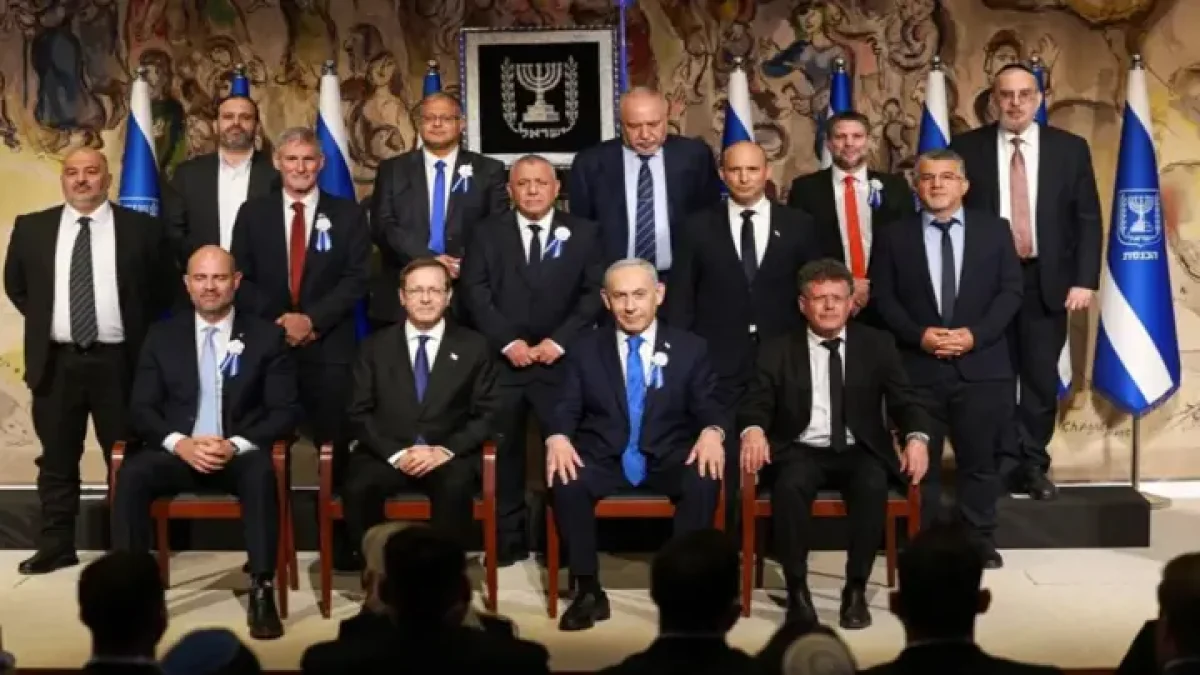
Prime Minister Benjamin Netanyahu’s political legacy and nearly two-decade grip on Israeli politics faced a major test on Tuesday in Jerusalem at the opening session of Israel’s 26th parliament, the Knesset, as former army chief Gadi Eisenkot and his allies moved to reverse Netanyahu-era policies and pursue new investigations.
Legislative agenda and competing leadership pitches
Eisenkot’s Yashar party submitted key proposals at the start of the session, including a bill to establish an independent commission investigating security failures surrounding Hamas’s October 7, 2023 attack—regarded as the deadliest single day in Israel’s history. Netanyahu has long resisted an independent inquiry, denying personal blame and backing a politically appointed panel instead.
Eisenkot’s coalition, spanning disparate ideological parties, also introduced legislation to abolish controversial judicial overhaul measures enacted by Netanyahu’s government, which had triggered some of the largest protests in Israeli history before three years of regional war overshadowed them. The opposition bloc said it has also lined up enough support to install former senior military official Matan Kahana as Knesset speaker.
Even so, neither Eisenkot nor Netanyahu has secured the 61 seats required to form a majority cabinet, raising high stakes for Netanyahu—who faces potential prison time if convicted in ongoing corruption trials once out of power.
Before taking his parliamentary oath, 66-year-old Eisenkot, a relative newcomer to politics, pledged to assemble a national emergency government as quickly as possible in what he called a complex crisis. After the session, Netanyahu countered with a call for a national unity cabinet, citing threats from Iran’s clerical leadership, which he said had survived two major Israeli airstrikes ordered under his watch with backing from US President Donald Trump. Pointing to sweeping Democratic gains in last week’s US midterm elections, Netanyahu warned Israel could soon face international pressure to accept a nuclear-armed Iran—charges Iran rejects, and despite earlier claims by Netanyahu and Trump that Tehran’s nuclear program had been largely destroyed. Eisenkot dismissed Netanyahu’s address as disgraceful and self-serving, saying he is unfit to serve as prime minister for another minute.
Tensions over Arab lawmakers and ultra-Orthodox swing seats
Israeli President Isaac Herzog handed Eisenkot the mandate to form a government on Sunday, granting an initial 28 days extendable by 14 days, and urged lawmakers in his opening address to reach across political divides to avoid another election. Yet shouting matches broke out swiftly inside the chamber.
Israeli Arab representation grew historically in the new parliament amid anger over Netanyahu’s far-right government, boosting Kahana’s bid for speaker. However, several Arab lawmakers—descendants of Palestinians who remained inside Israel after 1948—walked out of the chamber during the national anthem to avoid standing, prompting Eisenkot coalition partner Avigdor Lieberman, a longtime security hawk despite breaking with Netanyahu, to reject any government dependent on Arab backing and ask online, “Do you want to form a government with them?”
Meanwhile, far-right caretaker National Security Minister Itamar Ben-Gvir shouted at Joint List leader Yousef Jabareen during the session, demanding to know whether he was swearing loyalty to Hamas, before order was restored. By contrast, Mansour Abbas, head of the moderate Israeli Arab party Ra’am, pledged to help remove Netanyahu, saying his party wants to be part of the solution.
Seeking an alternative to Arab coalition support, Lieberman urged outreach to two ultra-Orthodox Jewish parties holding 13 seats, despite years of criticizing their insistence on military draft exemptions. Eisenkot’s core alliance holds 48 seats and could reach a majority with outside support from the 19 Arab seats, whereas Netanyahu sits at 46 seats while United Torah Judaism, holding seven seats, has yet to renew its backing—leading Netanyahu to publicly urge ultra-Orthodox parties not to trust left-led promises.
বাংলায় মূল প্রতিবেদন পড়ুন · Read the original Bengali report