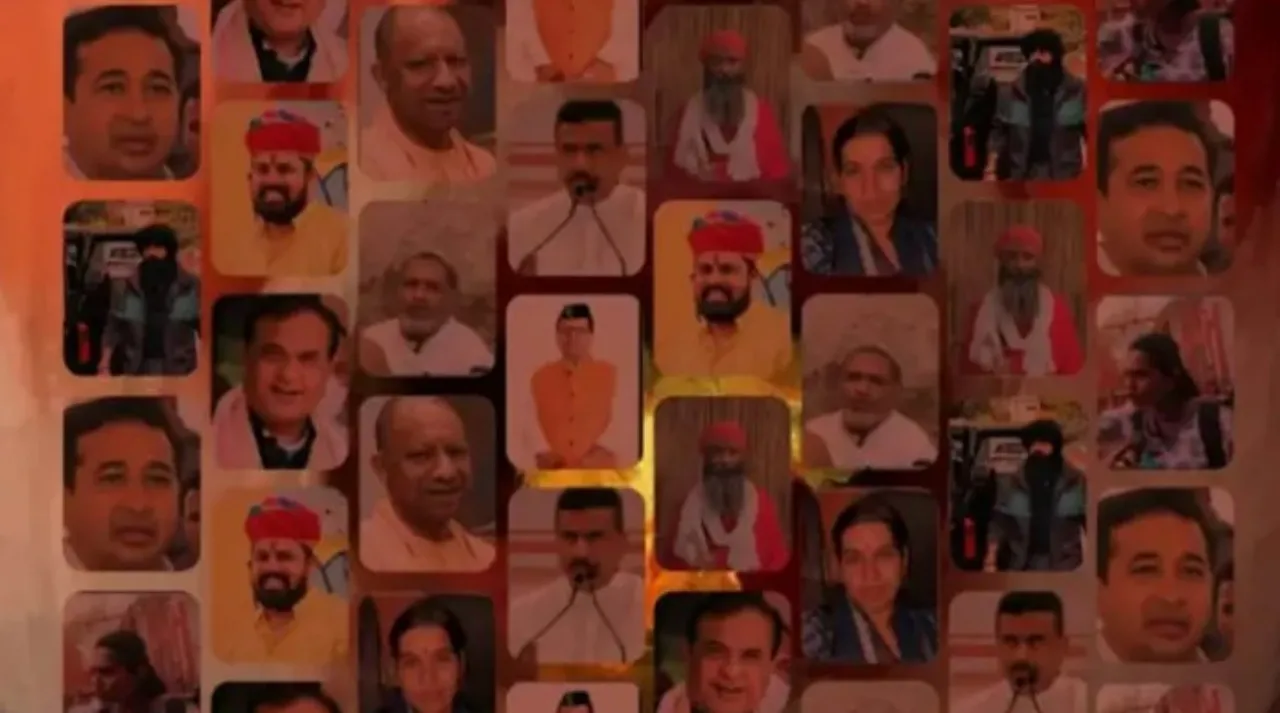
India saw 83 hate-speech incidents and 322 hate crimes targeting Muslims and Christians between January and September 2026—a combined nine-month toll of 405 incidents across at least 16 states—according to a report released in New Delhi on November 10 by the Association for Protection of Civil Rights (APCR).
Fifty-seven speakers delivered the 83 documented speeches, including 33 by individuals holding public office such as Prime Minister Narendra Modi, Home Minister Amit Shah, and four state chief ministers. Yet authorities registered First Information Reports (FIRs) in only six of those speech cases and made not a single arrest.
Uttam Nagar unrest and online video incitement
The report gave particular weight to anti-Muslim mobilization in Delhi’s Uttam Nagar JJ Colony after a 26-year-old man, Tarun, died in a March 4 Holi clash over a water balloon between two neighboring families. Even after police arrested six members of the accused family and later detained eight others, anti-Muslim campaigns escalated rapidly from March 5 onward.
APCR collected and analyzed 110 video clips linked to Uttam Nagar—79 posted on Instagram (where Reels served as the main distribution channel), 25 on X, five on Facebook, and one on YouTube. Of those, 60 explicitly urged killing, shooting, or police “encounter” killings of Muslims, nearly a quarter accused Delhi police and government of shielding Muslims, and others called for bulldozing Muslim homes and mosques.
Speakers included leaders of Hindutva outfits such as Hindu Raksha Dal Uttarakhand president Lalit Sharma, who threatened Muslims would not be allowed to celebrate Eid unless police shot them. APCR noted most speakers were outsiders from Dehradun, Meerut, Raebareli, and elsewhere in Uttar Pradesh, matching the profile of more than 100 people detained around Eid.
Between March 6 and March 21, the Bajrang Dal and Vishwa Hindu Parishad (VHP) protested outside Uttam Nagar police station, a house and two vehicles belonging to the accused family were torched, the Municipal Corporation of Delhi partially demolished the family’s house on March 8, a man was mob-lynched on March 9, and crowds were summoned to Uttam Nagar Metro Station on March 10. Following stays from the Delhi High Court on March 12 and an order on March 19 to ensure a peaceful Eid, prayers proceeded under heavy security on March 21—yet Delhi Police filed zero FIRs over the 110 videos beforehand.
Across the Uttam Nagar clips, 16 threatened to wipe out entire families including children, 19 urged Hindus to stockpile weapons and form armed groups—with one speaker telling listeners to hire and fund thugs—11 demanded Muslims leave the neighborhood, and 16 compared Muslims to animals. APCR also reviewed 24 online media segments from outlets including Sudarshan News, OpIndia, and Republic Bharat, finding some amplified tensions and promoted Uttar Pradesh’s “encounter model.”
Political speakers, boycotts, and Supreme Court orders
APCR documented 11 speeches by chief ministers and deputy chief ministers—including Uttar Pradesh’s Yogi Adityanath and Keshav Prasad Maurya, Assam’s Himanta Biswa Sarma, Uttarakhand’s Pushkar Singh Dhami, and West Bengal opposition figure Suvendu Adhikari—and 25 speeches by VHP, Bajrang Dal, Hindu Raksha Dal, and Sakal Hindu Samaj figures.
In Kolkata on March 14, Prime Minister Modi spoke of “infiltrators” altering Bengal’s demographic balance, while Home Minister Shah promised to expel infiltrators in March rallies in West Bengal and Assam. Of the 83 speeches, 37 directly incited violence or urged Hindus to take up arms, 19 labeled Muslims “infiltrators” or “Bangladeshis,” 16 called them “snakes,” “insects,” and “garbage,” 18 promoted social and economic boycotts, 12 pushed conspiracy tropes such as “love jihad,” “land jihad,” and “corporate jihad,” and four targeted Christians with conversion-linked threats.
Twelve habitual speakers—seven public officials and five activists or influencers including Maharashtra minister and BJP MLA Nitesh Rane, Telangana MLA T. Raja Singh, Riddhima Sharma, and Daksh Chowdhury—delivered roughly 50 speeches and clips, yielding five FIRs against four people (including only one officeholder, Singh) and zero arrests despite FIRs in Raebareli. Following APCR complaints on March 15 and a resident writ on March 17, Delhi Police told the High Court it deployed 800 officers and ordered 157 posts removed, without registering speech FIRs.
Although India’s Supreme Court ruled in Shaheen Abdullah v. Union of India in October 2022—and extended nationwide in April 2023—that police must register suo motu hate-speech FIRs without waiting for complaints or face contempt, APCR found only one suo motu FIR nationwide in the first nine months of 2026, filed on June 23 at Seoni Malwa police station in Madhya Pradesh. Applying the six criteria of the UN Rabat Plan of Action, APCR concluded six Uttam Nagar speeches crossed the threshold of incitement to hatred, discrimination, and violence, noting the assessment reflects civil rights analysis rather than a judicial ruling.
বাংলায় মূল প্রতিবেদন পড়ুন · Read the original Bengali report