TORONTO — The bright red train passed in front of us at least twice. While we waited for it, we had finished one ice cream and were debating a second. We were getting hot from standing so long. The line for ice cream was huge. So was the line for the train. Which to pick? In Toronto, who is foolish enough to do anything without standing in line?
The third time, the train pulled up at our stop completely packed and took on no passengers. A Gen Z attendant was on duty at the ticket counter, standing a bit off to the side with an “I don’t know what to do” air.
My friend Farzana Sharin lost patience. “You stand here, I’ll go see what’s going on,” she said, and before I could follow her she took off with her jacket and bag. From there she called and explained the real story. That was the first stop. The train was filling up there and arriving at the next stops already full. Was that even possible? They wouldn’t let people on with seats still empty? A Motijheel or Farmgate conductor would never do that. And why bother to climb on the train at all? We had seen the cherry blossoms already. As if I’d never been on a train. We’d crossed the Jamuna Bridge by train, my mother and aunts had crossed the Hardinge Bridge many times, and this Canadian toy train? “Run to this stop. The train’s almost here,” Sharin said in a cool voice, and I didn’t dare argue.
When I got there I found another Gen Z had been there the whole time. He wasn’t worried about how people at the next stop would board if the train filled up at this one. Still, it felt good to have been clever enough to come to the first stop and catch the train, then look sympathetically at the people waiting at the next stop, nod a bit and mouth “sorry” in classic “Canadian niceness.” Then the Gen Z’s shift ended. A woman somewhere between boomer and millennial took over. When the train arrived and a few seats filled, she actually blocked the door and started saying, “No, no, next train.”
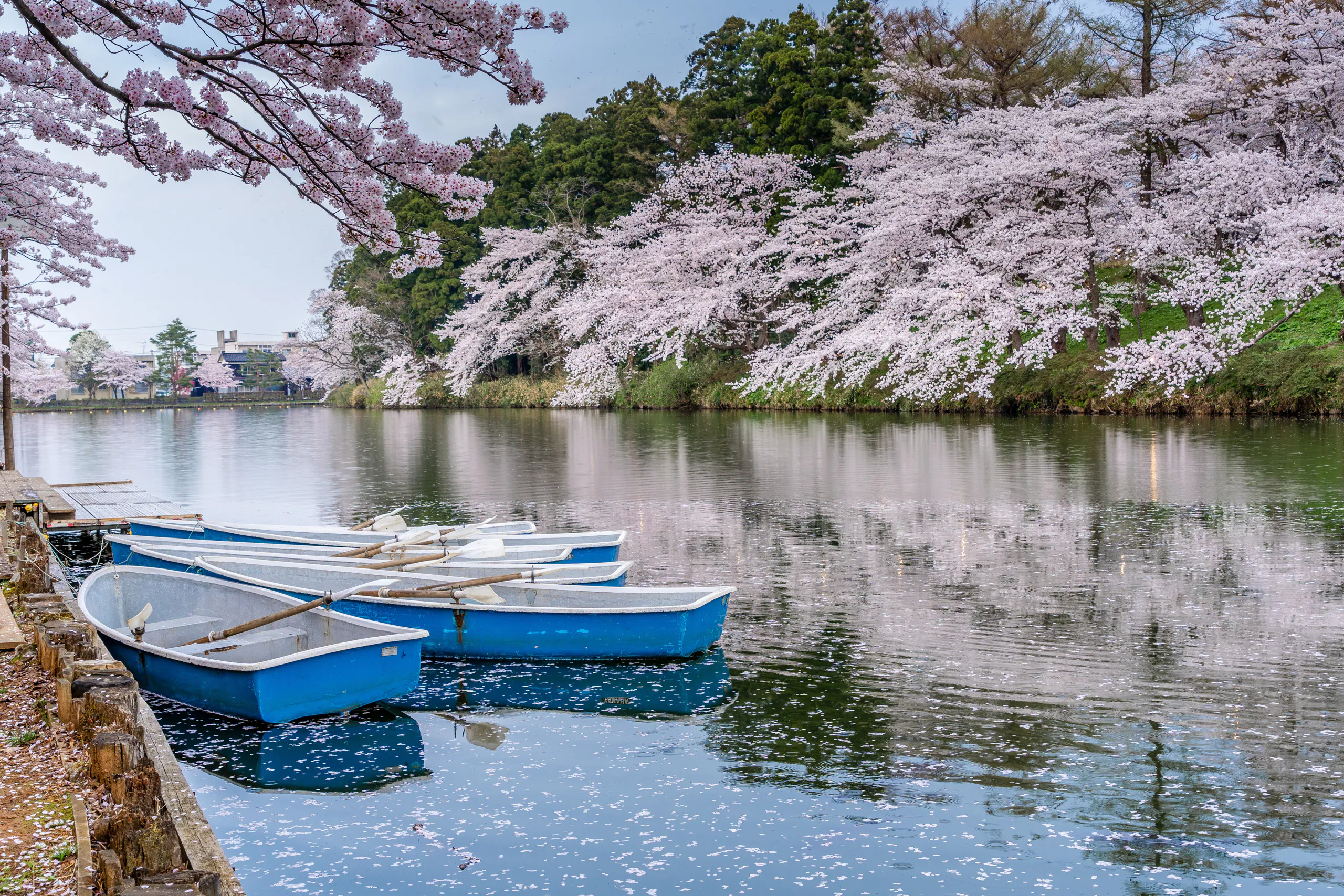
We had come to Toronto’s High Park during cherry blossom season. You need a jacket in the morning and evening, but the noon sun is fierce. This is the mood-swing season of Canadian weather. We had come prepared, with our favorite clothes under our jackets and water in our backpacks.
The little train was bright red. It can seat at most 15 or 20 people. Red benches. You can’t really call it a train. There are no tracks. The sides are open. Toronto’s High Park is so vast that the train exists to let you see the whole place in one ride. Why be so desperate to get on something this small? It’s smaller than a kiddie-park train. We come from a country that gobbles intercity trains for breakfast. There’s no explanation for my friend’s train fixation.
But when the whistle blew and the train actually started moving, with the grass and earth of High Park hitting our faces and the sweet scent of a distant flower drifting over, I looked at my friend and smiled, meaning, “It’s totally worth it.” She smiled back, meaning, “I knew it.” You don’t have to spell things out for school friends.
After two or three stops we got off. We had to take pictures. My goodness, it was a fish market. People were practically fighting for photo spots. They had come with big cameras, tripods and enormous lights. The crowds in front of the big trees were thick. We couldn’t even get close. So we decided we didn’t need the trees, just a few sprays of cherry blossom. We found a smaller tree where it was less crowded, dropped our jackets and bags on the ground and started shooting. Later I noticed others had picked up this Bengali trick. Crowds started forming around the smaller trees too. We checked our phones. We had at least five photos good enough to post. We made eye contact: “Done. Let’s go eat.”
Foreign lady, give me your cherry blossom, take my shiuli
Every time I post a cherry blossom photo, someone writes this line in the comments. It has happened every time, without fail. I had never heard the song before. I searched on YouTube. It is from the film “Lal Memshaheb,” sung by the late artist Andrew Kishore, starring Olivia and Wasim.
After hearing the whole song I realized the fourth line is the most important.
Foreign lady
Give me your cherry blossom
Take my shiuli
The two of us will both be indebted in love
Has anyone written a song this beautiful about cherry blossoms in Japan? I fall into Humayun Ahmed’s second category. There is a group that finds everything foreign appealing. There is another that bends its mouth at whatever it sees and says, “We have better at home.”
Would I really trade shiuli for cherry blossoms? I don’t think I would. For one, the cherry blossom doesn’t last. People say March-April-May, but the flower stays at most about four weeks in the whole year. And more importantly, I have never really grasped its delicate beauty — that soft palette between pale pink and white. We come from a country of fiery flowers: krishnachura, radhachura, jaba, raktokarabi, jarul. Even our pale flowers announce themselves with strong fragrance: shiuli, bakul, hasnahena, kamini. How can we be satisfied with something so soft, so light, “I came just to say goodbye” cherry?

It was a fish market for photo spots. Photo: Ruhina Taskin
The Canadian government could take inspiration from this song. Canada’s cherry blossoms are all gifts from Japan, as symbols of friendship and goodwill. Canada in turn could thank Japan with a song.
Canada’s recently former prime minister Justin Trudeau singing — foreign lady give me your cherry blossom / take my maple.
Wouldn’t that be wonderful?
The city’s most beautiful road
“Six taka fare. Will you go?”
“Get in.”
Hearing that from a rickshaw puller used to make me want to dance with joy. It meant we were going to my eldest aunt’s house. And on the way to my aunt’s house we would pass that road. I knew it, but still I would ask, “Are we going on that road?” Much later I learned the road runs from Shaheed Minar to Nilkhet. It is lined with red krishnachura and radhachura. To this day I cannot remember the difference between the two flowers.
As we approached Shaheed Minar we would lower the rickshaw hood. My mother would hold me, four or five years old, tightly. Above our heads a canopy of countless red krishnachura or radhachura would arch overhead. Petals would drift down onto my head. My mother would carefully brush them off and fix my hair with my clip.
Later, that road became something like my home when I was a student at Dhaka University. How many times I crossed the most beautiful road of my childhood on foot or by rickshaw. By then it no longer felt the most beautiful. I would get annoyed in traffic, rushing to class, irritated at having to wake up in the morning. I never once told my mother, let me take you in an open rickshaw and show you my campus.
Every year in Canada, Sharin and I go to see the cherry blossoms. Her nickname is Tisi, mine is Shama. Tisi and Shama always wear matching clothes that suit the colors of the cherry blossoms at the time and go to see them. I am not in Canada this year for the cherry blossom season. Tisi has texted many times: “You’re not coming, so we’re not going to see the cherry blossoms?”
Another year I might have felt bad. But this time she has little Arisha with her. She will take Arisha to High Park in a stroller. Arisha will be more interested in colorful ice cream than in the flowers. A thin cherry petal will fall on her forehead. Tisi will gently lift it off and fix her hair with a clip. They might video call me from the park. Even without me, mother and daughter will ride the bright red train and see the cherry blossoms this year with Arisha.
বাংলায় মূল প্রতিবেদন পড়ুন · Read the original Bengali report