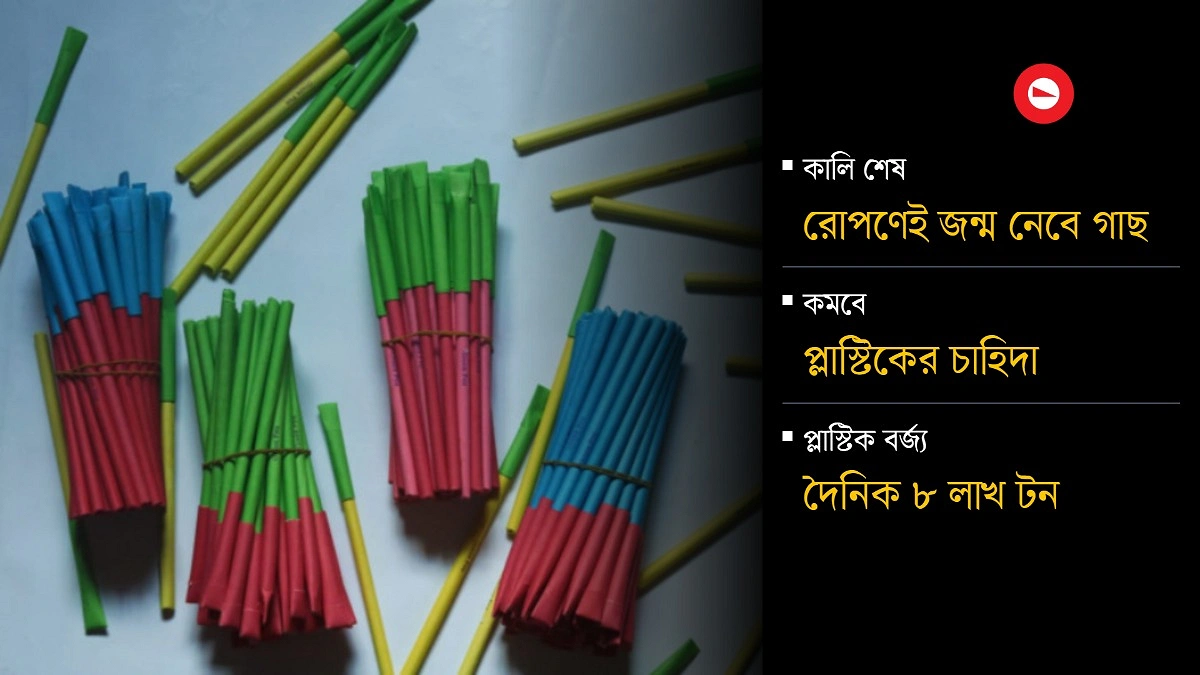
The Cabinet Division has instructed all government offices, including the Prime Minister’s Office, to use environmentally friendly pens instead of plastic pens. On July 28, it sent a letter to the secretaries of all ministries, divisional commissioners, deputy commissioners and upazila nirbahi officers, asking them to arrange the use of pens made from recycled paper. The ministries subsequently sent instructions to offices under their authority, according to sources.
The letter said plastic pollution is one of the world’s and Bangladesh’s major environmental challenges. Uncontrolled use of plastic and plastic waste threaten the environment and human health. Considering the overall situation, the government is committed to reducing plastic use and expanding environmentally friendly alternatives.
It said using recycled-paper pens and other recycled-paper products in government offices could help protect the environment and reduce plastic waste. Ministries, divisions, directorates, departments, agencies and other institutions were therefore asked to gradually reuse recycled paper and other materials in official work and to encourage and prioritize pens made from recycled paper.
The main feature of the environmentally friendly pen is that it uses paper instead of plastic. Each pen costs about 3 to 5 taka to make using paper, glue and a refill, and sells for 5 to 7 taka. The paper pen can be planted in soil after its ink runs out, allowing different plants to grow, according to the report. Using such pens could reduce demand for plastic and help address climate and environmental pressures. Environmentally friendly pens are already being made in different parts of Bangladesh and are available in Dhaka and elsewhere.
Bangladesh produces about 800,000 tonnes of plastic waste each day. About 36 percent is recycled, 39 percent is used for landfilling and the remaining 25 percent goes directly into the environment as a pollutant. Single-use polythene bags are among the most harmful plastic waste because indiscriminate use and poor management obstruct the normal flow of canals, rivers and drains, causing waterlogging. Although polythene use was banned by law in 2002, the lack of effective enforcement means it is still produced at about 1,200 factories, most of them around Dhaka.
বাংলায় মূল প্রতিবেদন পড়ুন · Read the original Bengali report