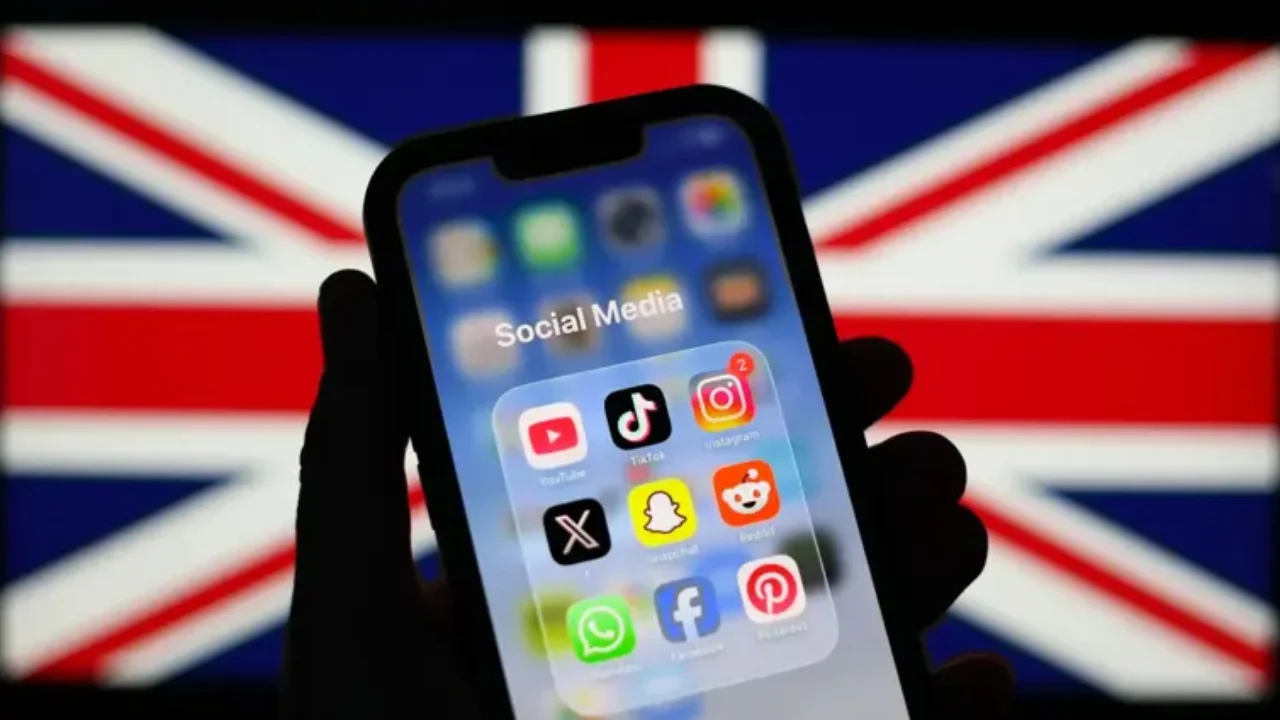
Most teenagers do not want to follow the UK government’s proposed night-time ban on social-media use, according to a survey published on Friday.
In mid-July, the UK government unveiled a plan to introduce a night-time “curfew” on social-media use for 16- and 17-year-olds. The plan was announced under former prime minister Keir Starmer’s government.
The proposed curfew would complement a ban on social-media use for under-16s. That ban, announced by Starmer in June, covers popular platforms including Snapchat, TikTok, YouTube, Instagram and Facebook.
Under the proposed rule, a night-time limit would be switched on as a default setting on 16- and 17-year-olds’ social-media accounts, so they could not use these platforms from midnight to 6am, though users could turn the feature off if they wished.
A survey by the consultancy Censuswide found that 85 percent of 16- to 18-year-olds said they would cancel the ban. About half of the teenagers surveyed said they would turn the feature off to talk to friends and family, while 37 percent said they would opt out of the curfew to watch online content.
Analysing the results, Liane Proctor, head of the regulatory division at the Online Responsibility Network, said it was unlikely that a curfew alone could prevent online harm, and that a curfew alone would not be enough to prevent online harm.
Two percent of the 1,000 teenagers surveyed said they refrained from using social media or watching short videos at night during the school term. More than 18 percent said they watched social-media content until 1am or later.
Education Secretary Bridget Phillipson said that if a large number of teenagers turned off the proposed curfew’s default settings, changing it to an optional or voluntary measure would be considered.
The UK government said its plan was inspired by Australia’s ban on social media for under-16s, introduced last December — though Australia has no curfew for 16- and 17-year-olds. Australia was the first country in the world to introduce such a ban, but its results so far are considered mixed.
বাংলায় মূল প্রতিবেদন পড়ুন · Read the original Bengali report