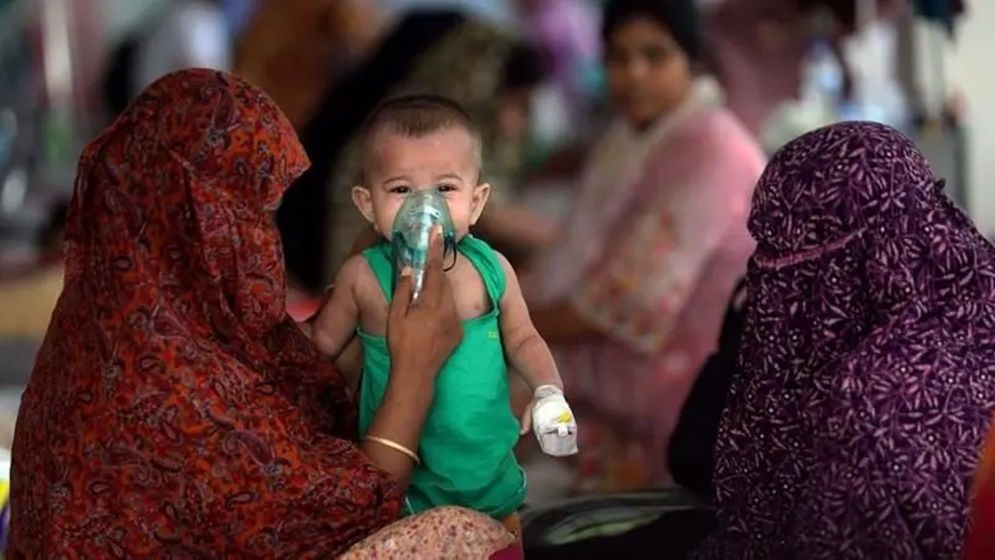
Three months after measles spread among children in epidemic proportions, the situation is still not under control, and the number of cases and deaths is rising at a geometric rate each day, BBC Bangla reports.
According to official figures, infections from measles and measles-like symptoms have already crossed 85,000 and at least 652 children have died. Public health experts blame mismanagement and wrong decisions for the failure to control the situation and for so many child deaths.
Dr. Benazir Ahmed, former chief scientific officer at the Institute of Epidemiology, Disease Control and Research (IEDCR), sharply criticized the situation. In his view, the government’s mismanagement caused the high number of deaths. He said the government’s failure to declare the measles outbreak an epidemic and to impose a nationwide health emergency, even after it spread widely, was a major mistake.
Analysts believe political motives may lie behind the decision not to declare an emergency. Dr. Benazir Ahmed said the government may have avoided the move out of an unfounded political concern that declaring an epidemic would be seen as an admission of its own failure or weakness. Had ICU capacity been expanded at district and upazila levels early on, and doctors and nurses given special training to mount an all-out response together, the number of cases and deaths would have been far lower, he said.
An intense debate is under way among political parties over the return of measles, which had been nearly eradicated in Bangladesh. Health Minister Sardar Md. Sakhawat Hossain has blamed the previous Awami League government and the caretaker administration for the outbreak. He said that although an MR vaccine campaign was due every four years, previous governments did not carry one out after December 2020, the effects of which are now visible. The health ministry has begun an investigation into how far the two previous governments are responsible for the outbreak, and has made an informal request to the World Health Organization (WHO) for an independent inquiry. Public health experts say that while the previous government may have had a role in the outbreak, full responsibility for failing to control it over the past three months rests with the current government.
Visits to Dhaka’s Bangladesh Shishu Hospital, Dhaka Medical College Hospital and Mugda Medical College Hospital found the measles wards nearly full of patients everywhere. Doctors said the patient load had begun to ease somewhat compared with the previous week.
Doctors said patients coming from outside Dhaka are mainly arriving late at hospitals with complications such as pneumonia, making them harder to save. Families of children being treated are going through severe financial and emotional crises. Many guardians, like day laborer Abdul Gani, are borrowing money to cover treatment costs, while some, after losing a first child to measles, are now fighting for a second child admitted with the same symptoms.
State Minister for Health Dr. M.A. Muhit denied the experts’ allegations of mismanagement. He said the outbreak began just 15 days after the current government took office, and that the death toll had remained comparatively low — in the hundreds rather than the thousands — because the government acted in time. He said there was no shortage of effort to bring the situation under control.
The government now plans to build ‘herd immunity’, or a strong protective barrier against the disease, through a nationwide vaccination program. But although the program began two months ago, full coverage of all children has not yet been achieved. With dengue cases also beginning to rise in hospitals, experts fear keeping the measles situation under control will become an even greater challenge in the days ahead.
Visits to Bangladesh Shishu Hospital, Dhaka Medical College Hospital, Mugda Medical College Hospital and several other Dhaka hospitals found the measles wards nearly full of patients everywhere.
Dr. Md. Atikul Islam, a pediatric specialist at Bangladesh Shishu Hospital and Institute, said the patient load had been much higher and had begun to ease somewhat since last week.
বাংলায় মূল প্রতিবেদন পড়ুন · Read the original Bengali report