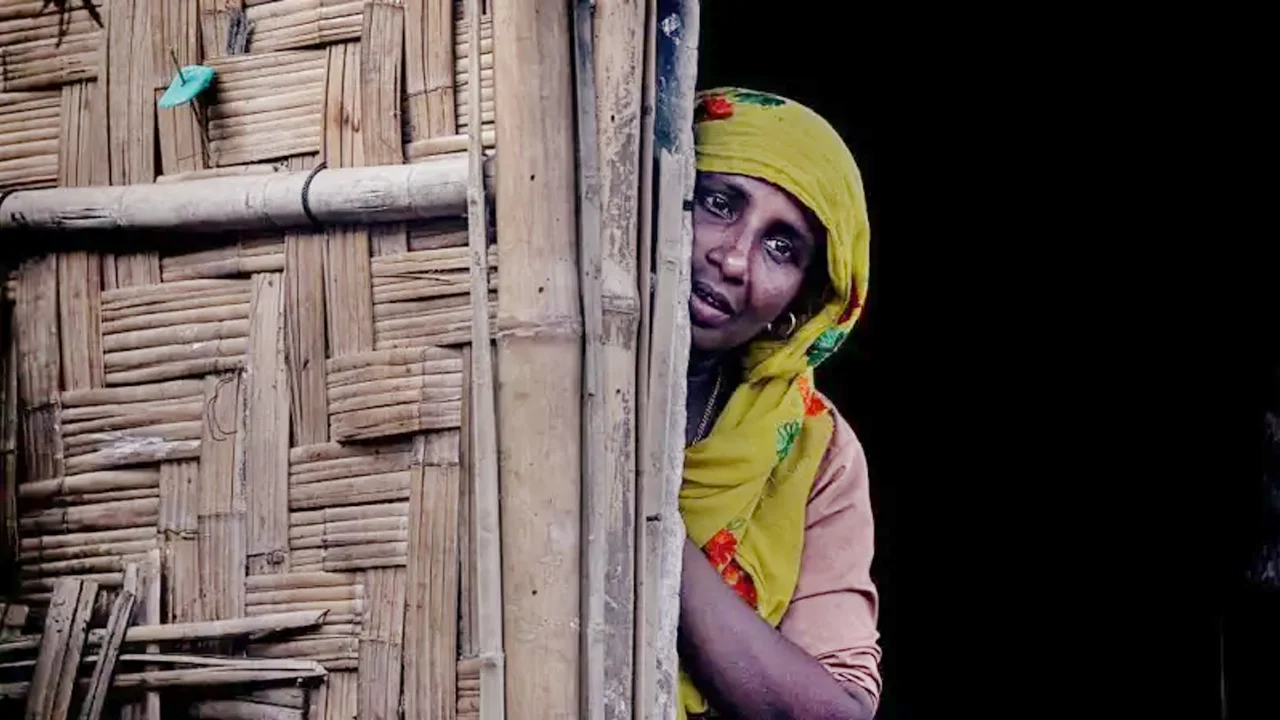
Following a recent Myanmar government statement once again describing Rohingya people who fled Myanmar and took shelter in Bangladesh as “Bengali,” the Bangladesh government has said international pressure is being applied on Myanmar’s government and the Arakan Army over Rohingya repatriation.
But questions are being raised over why Myanmar’s government suddenly issued such a statement now, describing Rohingyas there as “Bengali.” Discussion has also emerged over whether this will obstruct Bangladesh’s repatriation efforts and push the Rohingya crisis into an even more complicated phase.
That is because Myanmar has claimed that no group by the ethnic name “Rohingya” exists in the country at all.
Analysts, however, say the sudden “Bengali” controversy is essentially a signal that Myanmar’s government has no genuine interest in taking the Rohingya back — something they describe as a longstanding tactic of Myanmar’s military-backed government.
A leader of a Rohingya organization said the Rohingya in Rakhine have been subjected to ethnic cleansing, and the present reality is that neither Myanmar’s government nor the Arakan Army wants to take them back.
In his view, that same message is embedded in the government’s new statement.
In 2017, facing violent persecution by the military in Myanmar’s Rakhine state, roughly 750,000 Rohingya crossed the border into Bangladesh to save their lives.
Before and after that, roughly four to five hundred thousand more Rohingya arrived in Bangladesh from Myanmar at various times.
Has the situation grown more complicated?
Nurul Islam, affiliated with the Rohingya organization Arakan Rohingya National Organisation, says Myanmar’s government has further intensified the complications that arose from the military coup in Myanmar (Burma) some years ago.
He said: “They carried out a massacre of the Rohingya. So how would they ever admit it? They were able to do this because the international community granted them impunity. The Rohingya are citizens of Rakhine and of Myanmar. Myanmar’s government has never shown genuine willingness on repatriation while acknowledging this. What has now been said is simply a continuation of that pattern.”
Myanmar does not recognize the Rohingya among its 135 officially recognized ethnic groups. It has always labeled them “Bengali.”
On April 28, Foreign Affairs Adviser Dr. Khalilur Rahman told parliament that the number of Rohingya displaced from Myanmar and sheltering in Bangladesh currently stands at roughly 1,189,000.
But through its statement, Myanmar has signaled that it does not attach importance to Bangladesh’s figures. Many believe this is Myanmar once again highlighting its lack of interest in repatriation.
Retired Major Emdadul Islam, a former Bangladeshi diplomat posted in Myanmar and a security analyst, says Bangladesh should not allow itself to be drawn into the “Bengali” controversy.
He said: “Instead, Bangladesh’s position should be that Myanmar must take its citizens back. Myanmar’s government has floated this so-called statement as a tactic specifically meant to stall the repatriation process.”
Asked what might explain such a sudden tactic, he said: “The prime minister’s recent visit to China raised the subject of a China-Myanmar-Bangladesh corridor. Myanmar’s government doesn’t genuinely want that. This new controversy could be one reason behind it, too — because a project like that corridor cannot move forward unless relations are smooth and normal.”
বাংলায় মূল প্রতিবেদন পড়ুন · Read the original Bengali report