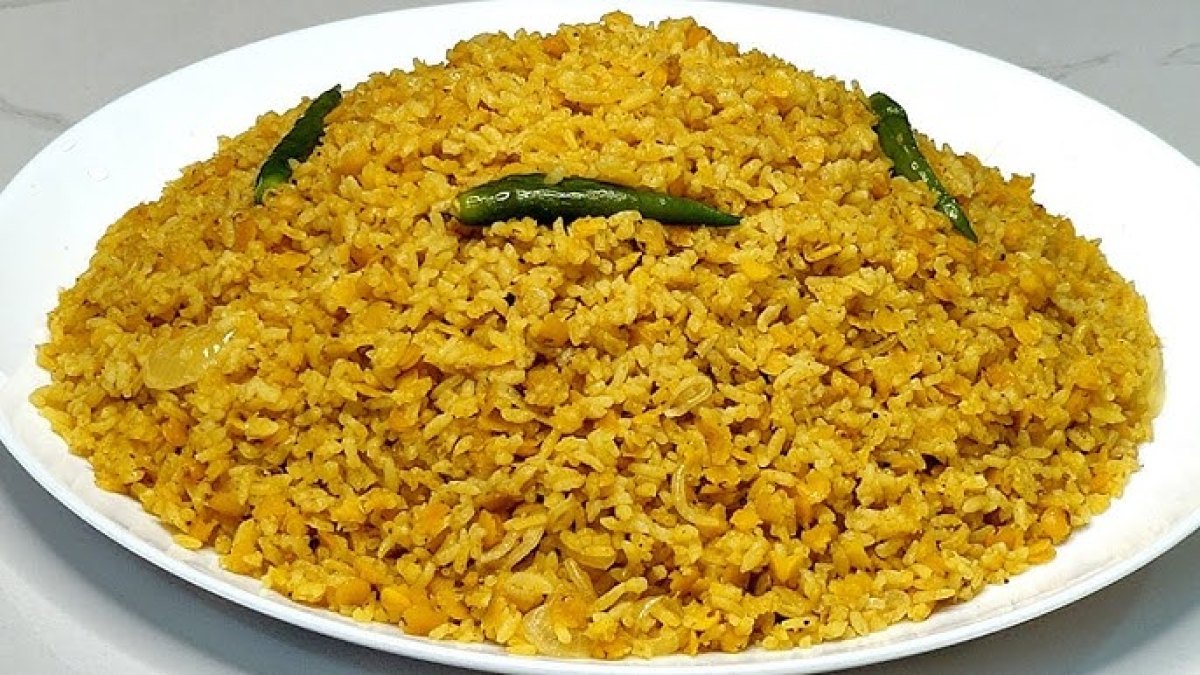
Dhaka: Raindrops tap against the window. The sky turns gray. Distant trees blur. A damp scent fills the air — the smell of wet earth. The moment that scent reaches the nose, the mind softens a little. Busyness pauses. Time slows. And in that slowing, the thought surfaces from somewhere: how nice it would be right now to have a hot plate of khichuri.
The feeling is so familiar and so deep that none of us really questions it. We simply accept it: rain means khichuri. As if the equation has been quietly written somewhere inside us.
Khichuri is really not just a dish. It is a kind of feeling, mingled with the long-stored memories and experiences within us. The connection becomes clearer when we recall childhood rainy days. Then, rain meant holidays, lazy afternoons, the smell of onion and turmeric drifting from the kitchen. As rice and lentils slowly cooked together in the pot, an unspoken anticipation seemed to gather: when will it be ready to eat?
That plate of hot khichuri, with fried egg or fried eggplant on the side and rain falling outside, is not just an image of food but a picture of security and comfort. It felt as if all the world’s unrest had stopped at the door. The peace, the warmth of home — all of it mixed with the taste of khichuri and became fixed in our memory.
The roots of this habit go even deeper. In our agrarian life, especially in rural Bengal, the rainy season meant a time of work on one hand and a time of pause on the other. When heavy rains made it difficult to go outside, cooking had to be done with whatever was on hand. Rice and lentils were in nearly every household. From those simple ingredients came khichuri — easy, nutritious and filling. Gradually this practical necessity turned into culture.
The sound of rain on tin roofs in the village, the water gathering in the courtyard, feet in the mud — even amid all this, the habit of sitting around a pot of khichuri is not just about satisfying hunger. It also creates the joy of being together. This sense of togetherness, of sharing, has turned khichuri into a kind of social symbol.
The city has changed, lifestyles have changed, but the feeling of a rainy day has not changed much. If anything, in busy urban life, rain seems to bring a small pause. Streets feel empty, time slows, people want to go home. In that stopped time, the craving for something simple, warm and uncomplicated lands exactly where khichuri sits.
The effect of the weather is not small either. On a rainy day, the body wants warm and comforting food but nothing heavy. The soft, warm character of khichuri soothes the body and calms the mind. This blending of physical and mental comfort deepens the pull toward khichuri.
The interesting thing is that we eat khichuri at other times too, but then it is simply “eating.” On rainy days? It becomes “experience.” The same taste, the same ingredients — yet it feels different. Because then the weather, memory and mind around us all blend together.
It is that blending that matters. Then khichuri is no longer just food; it becomes a symbol of home, of the soil, of the people we love. So when the rain comes, we think of khichuri not just to fill the stomach but to return for a moment, to pause for a moment, to find a small shelter within ourselves.
In the end, in a plate of hot khichuri, we find the simple rhythm of our lives, the pull of roots and that unblemished peace that may be rare in busy life.
বাংলায় মূল প্রতিবেদন পড়ুন · Read the original Bengali report