Education Desk:
In the two days since this year’s SSC results were published, reports have emerged from different parts of the country that several students died by suicide after becoming distressed over failing. A 16-year-old science student at Chandrakona Girls’ High School in Nakla, Sherpur, reportedly died after failing four subjects. A 16-year-old student of Bahadurpur Secondary Girls’ School in Bheramara, Kushtia, reportedly died after failing. A 16-year-old student of Chakpara Adarsha School in Shibganj, Chapainawabganj, reportedly died on Monday afternoon after failing English.
A 16-year-old science student known for good results at her school in Bagmara, Rajshahi, reportedly died after failing. In Muksudpur, Gopalganj, a 17-year-old humanities student reportedly died after becoming distressed by news of failing. Similar reports have emerged from several other places.
Professor Dr Mohammad Moninur Rashid of Dhaka University’s Institute of Education and Research said the country’s defective education and examination system is one of the main reasons students who fail take their own lives, and the government and society must share responsibility. He said 10 years of education are assessed through examinations lasting a few hours, an outdated system that has not kept pace with the world.
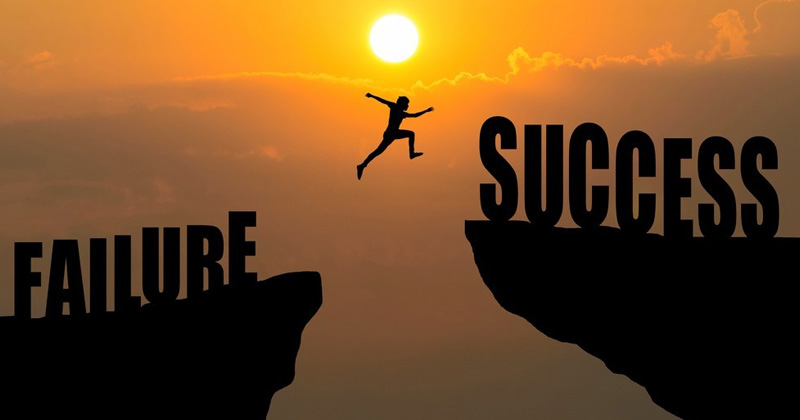
He said education and examinations must be radically changed, with 60% classroom assessment of learning outcomes and skills. Students should be allowed to retake only the subject they failed. Addressing students, he said failing does not mean life is over: many scientists and entrepreneurs reached the highest levels of success after failing. Students should not lose hope but reflect and stand up again.
This year’s SSC and equivalent results were published on Monday. Of 1,829,485 candidates, 1,138,877 passed and 690,608 failed. The average pass rate across 11 education boards was 62.25%, about 6.2 percentage points lower than last year and the lowest in 19 years.
Shahnewaz Khan Chandan, assistant professor at Jagannath University’s Institute of Education and Research and member-secretary of the Education Rights Council, said the existing system often drives students to extreme despair and must be changed. He said vocational education and alternative opportunities for students who fail could prevent such incidents. Failing SSC or an equivalent examination does not mean life is over; many people who failed entrance examinations eventually achieved great success.
One much-discussed example is Taimur Shahriar. A school “first boy” and scholarship recipient, he failed chemistry in SSC twice in 2001. He passed in 2003 with a GPA of 3.75, scored 4.80 in HSC, later graduated from Dhaka University and ranked first nationwide in the education cadre of the 33rd BCS. Saiful Islam Sohel is another example: after failing SSC on his first attempt in 2007, he completed higher education at National University and was recommended for the tax cadre in the 40th BCS.
There are also examples of success in creative professions after educational failure. Actor Ziaul Haque Palash, known for playing Kabila in the web series “Bachelor Point”, established himself in the media after failing SSC in 2009. His mother said that failure created in him the determination to do something.
Outside Bangladesh there are countless examples of success beyond examination results. Alibaba founder Jack Ma scored only one in mathematics on a university entrance test, failed to enter a good university after three attempts and was rejected for a job at KFC. Apple’s Steve Jobs did not finish college, and Microsoft’s Bill Gates left Harvard before completing it and built one of the world’s leading technology companies. Reliance Industries founder Dhirubhai Ambani was an average student at school, while former British prime minister Winston Churchill repeatedly failed at school but later led his country in World War II and won the Nobel Prize.
Educators say these examples prove that perspective, courage and relentless work—not marks or certificates—move people towards success. Their message to those who did not achieve the desired result is that learning from failure and refusing to give up are the keys to long-term success. One examination result does not determine future potential; the resolve to try again after every setback shapes a person’s true identity.
বাংলায় মূল প্রতিবেদন পড়ুন · Read the original Bengali report