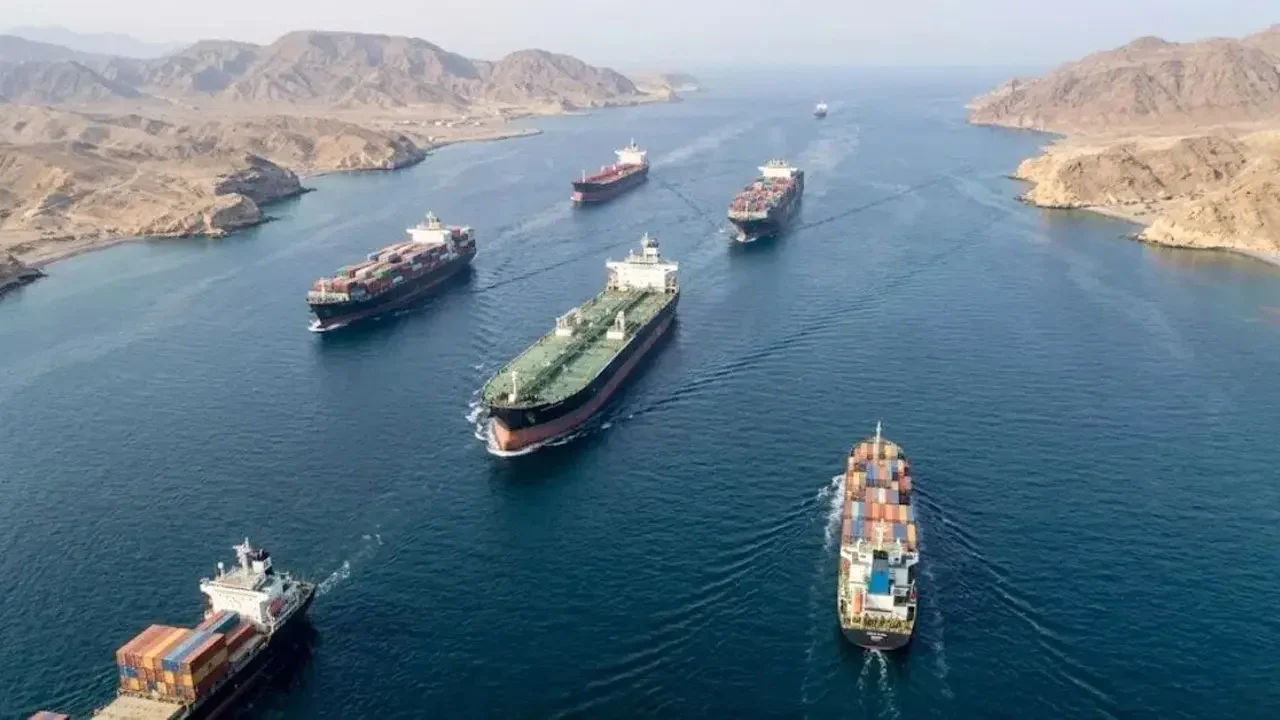
Under a proposed deal between Iran and Oman, Tehran could gain final control over ships entering the Gulf through the Strait of Hormuz.
A senior Iranian official and two regional officials familiar with the matter told Reuters that if the deal were signed, it would bring Iran a major diplomatic success.
The deal is being negotiated as part of a broader diplomatic effort to end the five-month war with the United States. Washington made no immediate comment on the possible deal.
US President Donald Trump recently said an agreement to reopen the Strait of Hormuz was coming very soon. But US officials have repeatedly said they would never agree to hand Iran control of this vital global waterway.
Under the proposed deal, establishing Iran’s control over ships entering the Gulf would be seen as further strengthening Tehran’s influence in the Middle East. Before the war, all ships moved freely through the Strait of Hormuz without paying any fee.
As part of the broader diplomacy, bilateral talks are under way between Iran and Oman over the strait, whose northern part is controlled by Iran and southern part by Oman. Iran said significant progress had been made. Under the proposal, ships would have to pass through Iran’s waters to enter and leave the Gulf.
Meanwhile, Iran has warned Gulf countries that if the United States launches fresh attacks on its territory, it will strike back at key energy installations across the region. Five sources familiar with the matter told Reuters that Iran was sending such a message to deter the United States from renewed military action.
A source from a Gulf country told Reuters: “Iran’s message was absolutely clear. If the United States attacks Iran’s infrastructure, they will strike back at energy installations and other key targets in the Gulf region.”
Iran is currently attacking US regional allies with missiles and drones, and is also targeting commercial ships that cross the Strait of Hormuz without Tehran’s permission.
At a rally in Las Vegas, Trump said he still wanted to give priority to a diplomatic solution. “I want to make a deal, because I don’t want to kill people. But at some point maybe it will have to be done,” he said.
According to Iran, more than 3,400 people have been killed in Iran since the United States and Israel began the war with Tehran on 28 February. The United States, for its part, has said 18 of its soldiers have been killed in the war.
The Iranian and regional sources who spoke with Reuters said that although progress had been made, several important issues had not yet been finalised, and that they did not agree with Trump’s claim that a deal to reopen the Strait of Hormuz would happen soon.
A regional official said: “A concession has already been made on accepting some form of Iranian control over the Strait of Hormuz.” Another official said: “But exactly what control means has not yet been decided. The Gulf countries want responsibility for ship searches to stay with regional countries, and that any fee, if charged, should not be mandatory.”
A senior Iranian official said Tehran wanted to charge a fee of 5 to 7 percent of the value of goods from ships using the Strait of Hormuz. Oman had proposed a fee of about 3 percent. But the United States opposes imposing any fee.
The official also said that, under the proposed deal, Iran would control ships entering the Gulf, but that the biggest unresolved issue now was what Iran’s role would be for ships leaving the Gulf.
Iran’s deputy foreign minister Kazem Gharibabadi told state news agency IRNA: “This system has been designed so that commercial ships use Iran’s waters when entering and leaving the Gulf.” He said a basic understanding had been reached in the talks with Oman and it was now on the verge of being finalised.
Gharibabadi claimed the United States had sent a message that it was ready to fully return to the commitments of a memorandum signed in mid-June, which called for an immediate halt to military operations. He said this was one of the conditions for reopening the Strait of Hormuz, but that there had been no direct talks with the United States recently.
At the start of the war, Trump had said it would end with Iran’s unconditional surrender and that the United States would decide who would lead the country. But ahead of the November midterm elections, and facing US public opposition to the war, Trump is now under growing pressure to find a diplomatic solution. No US military operation, including two straight weeks of air strikes in July, has managed to weaken Iran’s control over the Strait of Hormuz. US military officers have told Trump that stocks of some key long-range weapons are running down fast. A Reuters report on Tuesday said the US military had used up almost its entire stock of precision long-range missiles.
বাংলায় মূল প্রতিবেদন পড়ুন · Read the original Bengali report