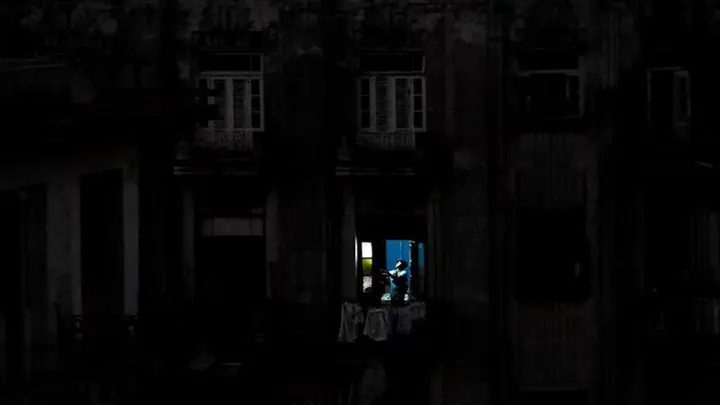
Cuba has suffered another major power failure. Hundreds of thousands of people were left without electricity on Friday when the country’s entire grid suffered a total disconnection. The country’s energy ministry gave the information.
Cuba’s grid operator, Union Electrica (UNE), said the failure began a little before 2pm local time on Friday. Bad weather in central Cuba, along with a transmission fault, has been cited as the cause.
Work began after the failure to restore supply gradually. By Friday evening it had been possible to bring power back to some critical areas in the capital, Havana, including hospitals and water supply pumping stations. Work to restore electricity across the country was still continuing on Saturday.
Felix Estrada, director of UNE’s national load dispatch department, said a process of gradually restoring supply had begun.
At least the sixth major failure this year
This is at least the sixth partial or complete power failure to hit Cuba this year. The country’s electricity system has been under strain for a long time because of long-outdated power infrastructure, a fuel crisis and excessive dependence on fuel imports.
Cuba imports a large share of its fuel. Havana has pointed to US sanctions and obstruction of oil supplies as reasons for the deepening fuel crisis. Reports say shortages of food and medicine have grown over the same period, with effects on the running of hospitals, schools and government offices.
Frank Lorenzo, a Havana resident, told Reuters that frequent power cuts had become almost a habit. He said such outages used to happen about once a month, but that the situation had recently grown worse.
Lidia Fernandez, a 36-year-old schoolteacher, told AFP that shortages of water and cooking gas alongside the electricity had made their lives difficult. Francisco Rodriguez, 78, said his house had been without power for 28 hours straight up to Friday, and spoke of his fear that it could be days without electricity.
Protests over the power crisis
The repeated power failures have led to some rare protests in Cuba. Unauthorised protest is illegal in the country and taking part in such demonstrations carries the risk of imprisonment. Cuba’s government has blamed the policies of US President Donald Trump’s administration for the country’s fuel crisis. Havana has pointed to Washington’s sanctions and obstruction of oil supplies as among the causes.
The United States, for its part, has blamed Cuba’s internal management for the electricity crisis. Washington is also pursuing a policy of applying broader pressure on the Cuban government.
Extra strain as Venezuelan oil stops
Its ally Venezuela long played an important part in Cuba’s energy system. By various estimates, Venezuela was supplying Cuba with about 35,000 barrels of oil a day up to the start of this year, roughly half the country’s total need. That supply to Cuba stopped after Venezuela’s own oil supply system was disrupted, making the fuel crisis sharper still.
US President Trump has threatened tariffs on countries supplying oil to Havana. The United States has also seized several oil shipments bound for Cuba. Between ageing power infrastructure, fuel shortages and the pressure of international sanctions, Cuba’s electricity system is now in serious crisis, and Friday’s latest failure has made that crisis plainer still.