The government is developing an integrated strategy to diversify both products and markets, aiming to increase Bangladesh’s export earnings and reduce reliance on ready-made garments. Separate market-based export plans are being prepared after assessing opportunities, existing barriers, competitor positions and steps Bangladesh should take in 18 major trading destinations worldwide.
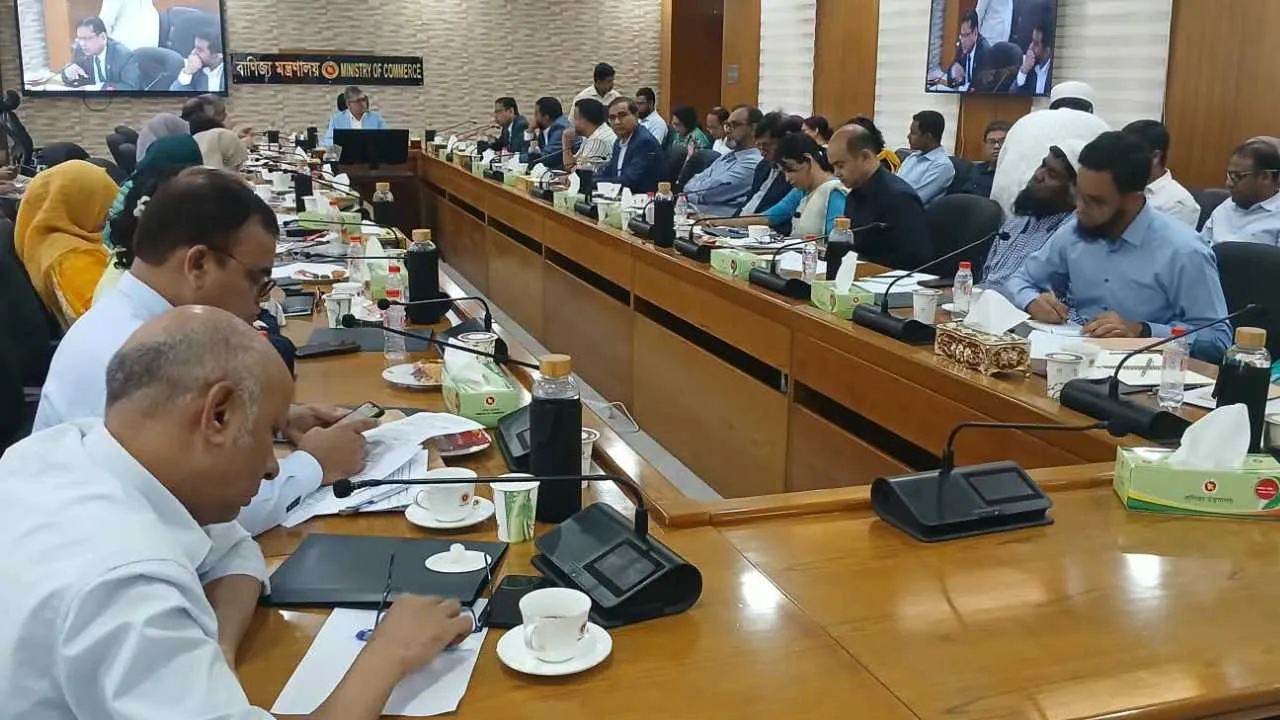
Commerce Secretary Md Ataur Rahman Khan made the remarks while chairing a workshop titled ‘Bangladesh Export Diversification Strategy: Product and Market Diversification Across 18 Key Trading Destinations’ at the Commerce Ministry’s conference room in the Secretariat on Monday, September 28.
The commerce secretary said equal importance was being placed on product and market diversification to make Bangladesh’s exports stronger and more sustainable.
Country profiles and practical strategies are being prepared through detailed data collection and analysis of the 18 selected export destinations, he said.
Information has been collected from Bangladesh’s commercial wings on conditions in the markets, export barriers, promising Bangladeshi products and opportunities for expanding trade, Khan said. The information will be consolidated into a separate action plan for each country.
He said officials were following a specific matrix for the market analysis.
The matrix covers Bangladesh’s share of total exports to each country, its main competitors in specific products, ways to improve competitiveness, and policy and institutional measures needed to expand markets.
Khan said analysis of the 18 markets would help identify promising new Bangladeshi products, expand markets for existing goods and determine the steps needed to enter new markets.
Mustafizur Rahman, a distinguished fellow at the Centre for Policy Dialogue, told the workshop that export diversification must give equal importance to services as well as goods. He called for effective measures to develop information technology, a skills-based economy, capacity-building services and freelancers.
Emphasizing skills development and technological progress, Rahman said greater use of technology in production and services was needed to increase competitiveness in international markets.
He also advised stronger efforts to use geographic proximity and market potential to increase exports of Bangladeshi goods and services to neighboring countries.
Representatives from BGMEA, FLEXA, CPD, Walton Group, the Bangladesh Agro-Processors’ Association, pharmaceutical businesses and other industrial and commercial sectors presented proposals for export expansion. Officials from the Commerce Ministry and other relevant ministries and institutions also attended.
Participants stressed making pharmaceuticals, electronics, agriculture and processed agricultural products, leather and leather goods, light engineering, information technology and other service sectors more competitive internationally alongside ready-made garments.
People involved in the process said the strategy centered on 18 major trading destinations could help broaden Bangladesh’s export base, create new products and markets, increase market share in existing destinations and build a diversified, sustainable export structure over the long term.
বাংলায় মূল প্রতিবেদন পড়ুন · Read the original Bengali report