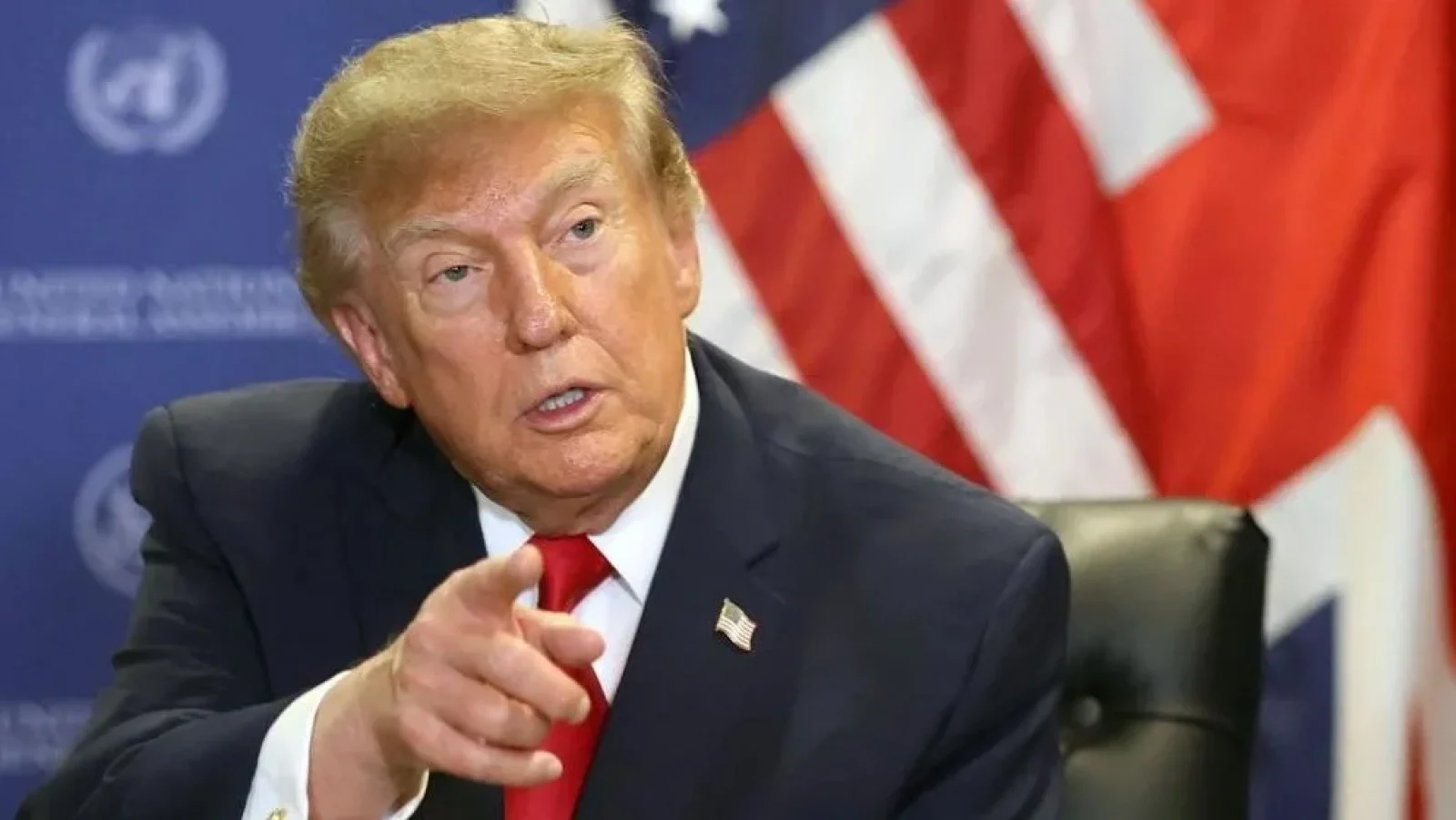
US President Donald Trump has rejected Iran’s proposal for a ceasefire and the reopening of the Strait of Hormuz. Analysts say Washington may believe that waiting longer, rather than accepting Tehran’s terms now, could intensify pressure on Iran and secure more favorable terms in a future agreement.
Trump told reporters on Saturday that he had not accepted Iran’s proposal. He said Tehran was interested in reaching a deal because it was in a difficult position. Trump also said he wanted an agreement, but that Iran’s current terms were unacceptable to him.
The next day, Iranian Foreign Minister Abbas Araghchi said Tehran had noted Trump’s initial response. He said Iran had not yet received a formal US reply to the proposal sent through mediators.
Iran’s proposal calls for the fighting to end and the Strait of Hormuz to reopen within seven days. In return, the United States would have to lift its naval blockade of Iranian ports, ease sanctions on the country’s oil sales and release about $12 billion, or 1 thousand 200 crore dollars, in frozen Iranian assets. It also calls for a region-wide ceasefire, including in Lebanon and Yemen.
Under the proposal, once those conditions were met, Tehran would reopen the Strait of Hormuz and begin talks with Washington on a final agreement. Iran’s latest offer has several similarities to a memorandum of understanding reached by the two countries last June. That understanding was never implemented because of disagreements over its terms.
Why does the United States want more time?
Analysts say the Trump administration believes greater economic and military pressure could force Tehran to offer more concessions later. Washington has already tightened the naval blockade on Iran, imposed sanctions on its oil revenue and threatened possible penalties against other countries that do business with Tehran.
The United States also recently imposed restrictions on Iranian aviation. US Treasury Secretary Scott Bessent had earlier announced plans for broader economic pressure targeting Tehran’s global financial interests.
Richard Weitz, a senior nonresident fellow at the NATO Defense College, said Washington may believe that allowing more time for economic pressure to build will compel Iran to make additional concessions in a deal.
But delay also carries risks. A prolonged conflict could push up global energy prices, extend the danger facing US forces and increase pressure on Gulf allies.
Political risks rise ahead of elections
Analysts say delaying an agreement with Iran could also create political risks for Trump. US midterm elections are due in November. In a Reuters/Ipsos poll conducted in late August, 63% of Americans opposed the US-Israeli military operation against Iran, while 31% supported it.
Continued increases in energy and transport costs could also deepen public concern about the cost of living. Analysts say a prolonged conflict could therefore affect domestic US politics.
Mohamad Elmasry, a professor at the Doha Institute for Graduate Studies, said Iran’s proposal could also be seen as a potential political opportunity for Trump. An agreement, he said, could create a path to lower oil and gas prices before the elections.
More pressure could backfire
Analyst Krieg said economic pressure on Iran was indeed increasing, but there was no guarantee that it would make Tehran offer greater concessions. He warned that Trump may be interpreting the economic strain on Iran as a willingness to surrender.
If the conflict continues, Iran could cause further disruption to energy supplies through regional infrastructure and the Bab el-Mandeb Strait, as well as the Strait of Hormuz. Activity by the Iran-backed Houthis in Yemen has already raised concern about Red Sea trade routes.
Krieg said a prolonged stalemate could increase pressure on Gulf states such as Qatar, Saudi Arabia and the United Arab Emirates, as well as on global energy markets. That pressure could eventually become a major problem for the Trump administration too.
Tehran is also betting on time
Harrison, a US-based analyst, said Tehran was probably not surprised that Trump rejected its proposal. He said one purpose of the offer was to signal to both the Iranian and American publics that Iran remained interested in negotiations.
Analysts say Iran also understands that Trump is seeking a deal he can present as a political success. Tehran is therefore trying to use time to its own advantage.
Krieg said Iran’s strategy was to keep up the pressure and create conditions that would ultimately force Trump back to the negotiating table. At the same time, the political and economic cost of leaving the conflict would rise as time passed.
Both sides appear to recognize the need for an agreement, but neither currently believes a quick settlement would best serve its interests. Each seems to be calculating that waiting a little longer could deliver better terms in a future deal.
বাংলায় মূল প্রতিবেদন পড়ুন · Read the original Bengali report